Practicing Purpose and Joy: Vocational Discernment for Faculty Members

This post concludes a series on faculty thriving and highlights the importance of cultivating purpose and joy for faculty members in higher ed. Drawn from insights from the volume the authors edited, it suggests that flourishing requires a rethinking of purpose and joy as practices, not destination, as well as a supportive institutional culture to cultivate well-being and fulfillment.

A co-authored series on what faculty members need to thrive vocationally.
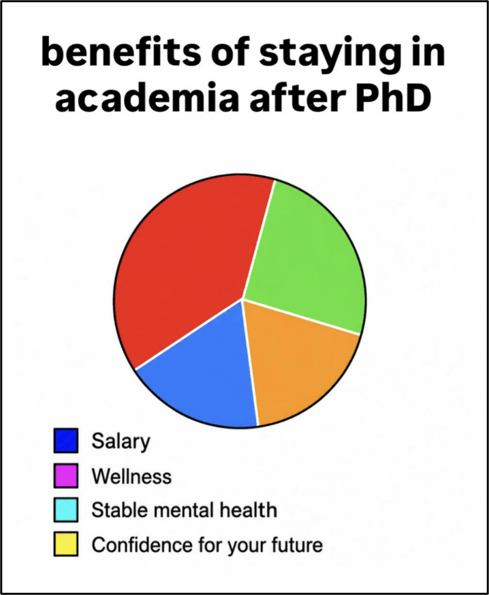
Last spring, we came across this image on Instagram (great oracle of wisdom that it is), posted by the Open Discovery Institute (ODIN), that summarized the “benefits of staying in academia after PhD.” Without putting too fine a point on it, the things that many of us might hope for (a fair salary, holistic wellbeing, good mental health, and vocational confidence in the future) were not included on the pie chart. In fact, as a close look at the chart suggests, it’s unclear what the actual benefits of remaining in higher education are. Compared to ODIN’s usual posts, which receive hundreds and sometimes a few thousand likes, this post received over 26,000. Clearly, it struck a chord.

As we conclude our series on pursuing purpose and joy as faculty members, we want to offer encouragement to our faculty colleagues in higher education, pushing back on the gallows humor that many academics, including ourselves, indulge in when we talk about our vocations. Our previous posts focused on faculty burnout, why our limitations are important, and how friendships help sustain us. Our final post reflects on cultivating purpose and joy.

Continue reading “Practicing Purpose and Joy: Vocational Discernment for Faculty Members”
Good Enough Faithfulness

This post highlights the pressure to achieve in higher education and offers an alternative to this mindset. It emphasizes the importance of embracing life’s messiness and acknowledging conflicting callings. Instead of striving for perfection, it suggests fostering gratitude and recognizing “good enough” actions to cultivate a meaningful vocation in different life seasons.

A series drawing on a therapist’s insights into play, wandering, and presence in relation to vocational exploration and discernment.

Humble callings upon an early rise, easy to cast aside.
The glory in a student’s struggle—how to uniquely guide?
A thoughtful intellectual, with time and curiosity to give,
An ideal image that often collides with how most of us actually live.
The simple truth is our lives are full, with care and needs each day.
How easy to critique, dismiss, and belittle the impact of our way.
The calling is not perfection and meeting every need,
The calling is rhythm, reflection, and goodness of the deed.

—Carrie Caudill

Achievement and optimization mindsets have become deeply ingrained in the culture of higher education. My own internal script often demands, “Go, go, go! Grade those papers. Make this class content more interactive. Don’t forget about applying for that grant proposal. Oh, and look on Amazon—your son needs a new lunch box. Don’t forget to respond to the Meal Train request, and the committee meeting is in 15 minutes, so you can do something in the 13 minutes before you log on to Teams. Go!”

scattered papers and broken pencils
Photo by Tara Winstead on Pexels.com
Continue reading “Good Enough Faithfulness”

What’s Your Purpose, When You Can’t Get out of Bed?

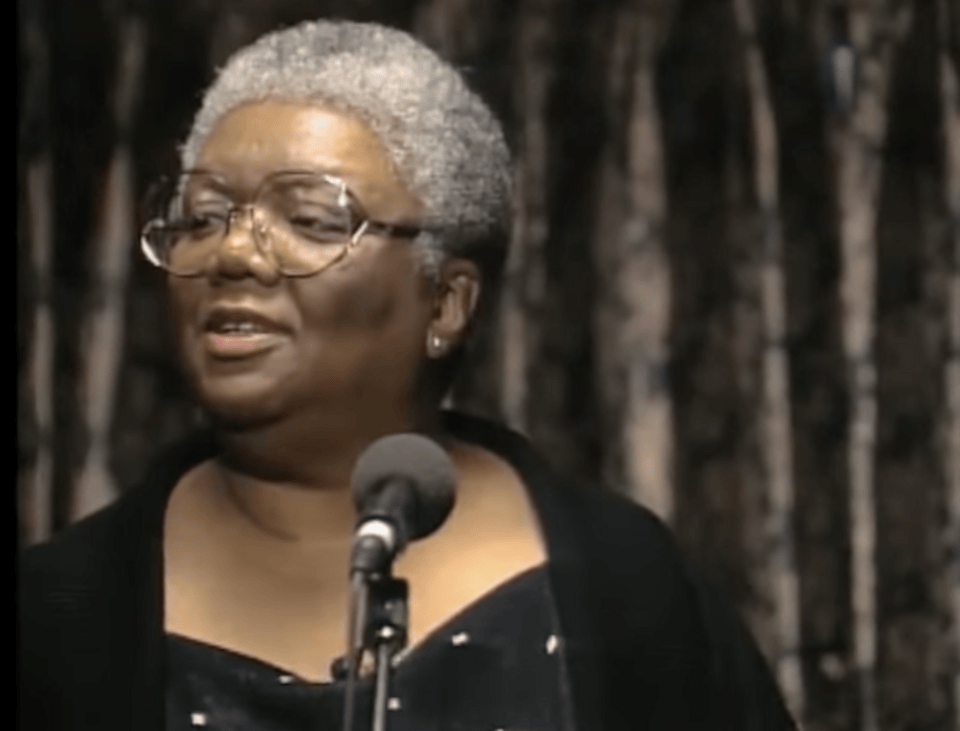
Lucille Clifton (Wikimedia Commons)

In her poem, “won’t you celebrate with me,” Lucille Clifton writes,

come celebrate
with me that everyday
something has tried to kill me
and has failed.

I first read these words when I was in college in the spring of 2012. Trayvon Martin had been killed, and I was sitting in a theology course on Genesis and Exodus, grappling with the fact that being a Black woman often meant not feeling safe in this world, in classrooms, and even in our bodies. At the time, the words made me deeply sad and, as my big cousin used to say when I was growing up, they “made my nerves bad.”

I didn’t truly embody these words or know their real impact until 2020. While everyone in the world was weathering the pandemic—during which over 300,000 people died in the United States alone—I was simultaneously struggling with challenges in my own body and navigating higher education as I held space for students whose stories were like mine. At that time, it felt almost impossible to support Black students exhausted from racial battle fatigue at a predominantly white institution. So much uncertainty and doubt played in my mind.

Continue reading “What’s Your Purpose, When You Can’t Get out of Bed?”

“It Changed My Life”: Centering Relationships in Communal Living

The Anne Devenney House at Fordham University provided young adults like Gina Ciliberto with transformative experiences through intentional living and community engagement. This inclusive environment fostered relationships, deepened purpose, and supported vocational exploration. Despite its closure due to financial reasons, the impact on residents’ lives and their ongoing connections highlights the value of such communities.

A series on the impact of intentional living communities on young adults as they explore and discern their vocations.

Gina Ciliberto lives in Yonkers, just blocks from the New York City borough she loves: the Bronx. In 2012, Gina graduated from Fordham University. During her sophomore and junior years, she lived at the Anne Devenney House, a university-sponsored, off-campus community that bridged the gap between students and their neighbors in the Bronx. Asked how the community impacted her, Gina simply said, “It changed my life.” 

Members of the Anne Devenney House community sharing a meal.

The Anne Devenney House began as a project of Fordham’s campus ministry. Although it didn’t require religious affiliation, all seven residents in the first year of this intentional community identified as Roman Catholic. Living together in a standalone house a few blocks from campus in a predominantly Latinx neighborhood, they committed to the three areas of the program: community service, campus outreach, and intentional community within the house. There were mandatory dinners together once a week, but they often shared meals informally.

Continue reading ““It Changed My Life”: Centering Relationships in Communal Living”

Moments of Annunciation: David Brooks

David Brooks discusses vocation as akin to falling in love, emphasizing emotional exploration and self-discovery. In the inaugural episode of this season of NetVUE’s podcast Callings, he shares insights on finding one’s calling by paying to attention to feelings of admiration, indignation, and enthusiasm, suggesting that deep self-awareness is essential for meaningful vocational discernment.

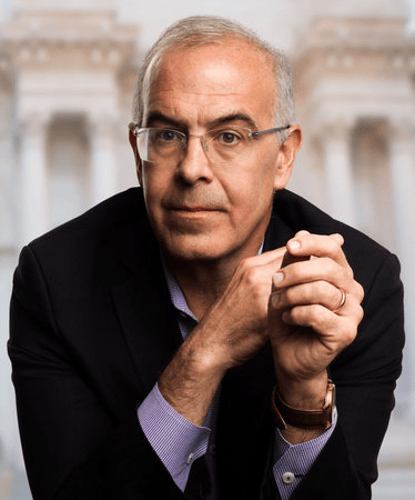
David Brooks

“Finding your calling,” David Brooks suggests, “is more like falling in love than it is like making a decision. It just happens to you.” One of the most recognized public intellectuals of our time, David is the featured guest in the first episode of season seven of NetVUE’s podcast Callings. In it, he reflects on the many ways he’s come to understand vocation and calling over the course of his life and career. Educators who work with undergraduate students will find much value in David’s experiences and storytelling.

For David, vocational exploration and discernment are rooted in our emotions and desires. His “main advice” to listeners, especially students, on how to live vocationally is “to fall in love with things” and to learn how to answer the question, “What do you really want?” This question might seem like a simple one to answer, yet it remains one of the most significant ones we need to ask ourselves; it can also be one of the hardest ones to answer authentically, given the self-awareness it requires. The question is important because, as David notes (drawing on the wisdom of one of his former professors), “what distinguishes people is the ruling passion of their souls.” To know a person—or a student—is not to reduce them to their GPA or their SAT scores, but to ask them, “What do you love?” In this way, “the most important quality to cultivate” in our lives is that of “being a good lover,” a quality that is central to vocational discernment. Ultimately, as David observes, the “process of discovering what you want is the process of finding your calling.”

Continue reading “Moments of Annunciation: David Brooks”

The Attention Gym II: Stretching to Listen

This post discusses enhancing students’ listening abilities through class discussions, emphasizing the contrast between dialogue and conversations that function more as disconnected monologues. It advocates for viewing the classroom as an “attention gym” to strengthen active listening skills, essential for vocational discernment. The text also highlights practices to promote a culture of attentive listening among students.

A series on how to help our students strengthen their abilities to pay attention to their lives, the world, and their vocations.

When I talk with students about the purposes of class discussion, I often show them the dinner scene from my favorite Sandra Bullock film, While You Were Sleeping. I ask them to describe what they observe about the quality of the conversation happening around the dinner table, and especially to note who seems to be listening. This scene helps us distinguish between dialogue, a method of building on each other’s ideas, and conversation that proceeds more like a set of disconnected monologues (however humorous).

Students often zero in on a key difference between the two. They note that in a dialogue, participants actively listen to understand each other. In the other kind of discussion, people listen for a break in the conversation to make space for their own voice.

It is easy to make the case to students that listening is hard, and as a culture, we are not very good at it. It is harder to explain how we can get better at it. Naming the classroom an attention gym—as I described in my first post in this series—provides the framework to highlight attention as a key resource in becoming a better listener. Class discussions then become the training ground for workouts in listening.

Continue reading “The Attention Gym II: Stretching to Listen”