

The first post in a collaborative series on vocation in the first-year experience.
Looking back on our own first-year experiences as undergraduate students, all three of us recognize how easily our memories have been shaped by what came afterward. As Cynthia reflects on her first year (admittedly through rose-colored glasses), she recalls the lifelong friendships she formed, her growth as a writer, finding a home in a faith community, and—viewed now through the lens of a career in higher education—the first seeds of her vocation. What is easier to forget are the uncertainties that accompanied those experiences: wondering if friendships would come and questioning whether admission to a “stretch” school reflected genuine ability or simply legacy status. She also lacked a clear sense of academic direction, even spending a season as a political science major, a choice that now seems baffling in terms of vocational fit.

Those of us who engage students in vocation can be guilty of wearing similarly colored glasses. As James Lang wryly notes in “The Myth of First-Year Enlightenment,” the faculty members most eager to build transformative first-year programming are often the very ones for whom early college was transformative, mistaking their own exceptional case for the norm. The first year often feels promising for robust vocational programming—a fresh start, an eager audience, and tangible touchpoints for engagement. Yet we sometimes overlook that first-year students are overwhelmed with big and difficult questions: whether they will make friends, whether they have what it takes to succeed, and whether they have chosen the right area of study. And we discount that these concerns are formidable distractions from the deep work required for vocational discernment.
How do we fulfill the promise of vocational formation in the first year of college without falling prey to the pitfalls? The three of us had the opportunity to explore answers to this question by participating in the recent NetVUE Resource Development Project, a group of colleagues convened by NetVUE to identify the lessons and opportunities of vocational formation in multiple areas—in our case, the first year—with the larger aim of enhancing resources for NetVUE member institutions.

The clear-eyed reality is that the first year is both rich with genuine potential and rife with well-documented problems as it relates to the work of vocational formation. The first year potentially sets the stage for a student’s vocational journey and offers a rich context that can shape the way students experience, interpret, and engage in their undergraduate education. The first year is also filled with perils for vocational programming. Students face multiple concerns and pressures in the first year; the process of entering college out takes a lot of mental energy for students as they adapt to college-level coursework and balance their academic responsibilities and their social lives. If we borrow from Maslow’s hierarchy of needs as a way of thinking about vocation, it is difficult to consider big questions of meaning and purpose when students are still navigating basic needs for adjustment, belonging, and competence. The added philosophical layer of deep discernment can be overwhelming at this stage, undermining the very formation that vocational exploration seeks to cultivate.
Just as students face multiple pressures that can impede their vocational formation, institutions, too, contend with multiple demands that are placed on the first-year experience that complicate matters, including a hyper-focus on retention. In this age of institutional fragility, first-year retention is an important priority that impacts budgets and institutional health as students continue through their undergraduate education. As it turns out, first-year students and the various tasks that support their onboarding require a lot of institutional energy.
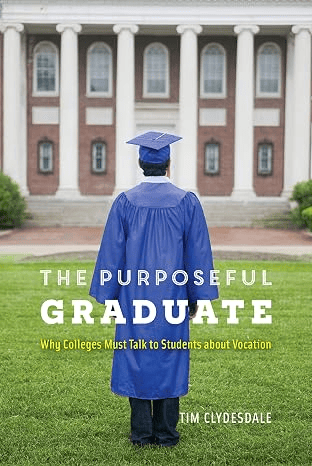
The case for waiting to focus on deep vocational formation until after the first year is not merely anecdotal; it is also supported by empirical research. In The Purposeful Graduate, Tim Clydesdale concludes that vocational formation programs targeting students during their sophomore and junior years accomplished disproportionately more of their intended outcomes than those focused on the first year. Clydesdale’s work bears out both the significance of vocational formation and the wisdom of being intentional about when it occurs. As institutions discern when best to invest resources in vocational programming, keeping this insight in mind is for the good of both our students and of our institutions. Multiple NetVUE-supported initiatives also echo this conclusion, illustrating that vocational initiatives realize fewer intended aims when trying to embed vocation too heavily in the first year.
How should we then invest our time and energy toward vocation in the first year? First, institutions need to begin with foundational work for vocational formation. Institutional leaders must consider the degree to which the institution has thought carefully about questions of vocation and calling, asking, “How does your institutional mission, identity, and vision inform what it means to educate for vocation?” Furthermore, institutional leaders must develop a full understanding of their students, not just college students generally, but the specific students enrolled in their institutional context. Educational leaders can then identify the key vocational touchpoints with the aim of intentionally integrating them into the institution’s culture and programs. Most significantly of all, as David Cunningham underscores, institutional leaders must cultivate
“a cadre of educators who, both inside and beyond the classroom, have learned how to entreat, cajole, encourage, and ultimately inspire young people to discern and explore their callings in life.”
Building on these foundations, we’ve identified the distinct opportunities for realizing the promise of vocational programs in the first year. As the three of us examined exemplary NetVUE projects, scholarly resources, and grant-funded initiatives across a range of institutional contexts, three strategic priorities emerged. Together, they reflect the collective wisdom of NetVUE and its member institutions’ sustained work on vocational formation. This blog series offers a synthesis of those insights.

In this opening post, we briefly introduce the three strategic priorities that have shaped effective first-year vocational formation. First, we realize the promise of vocational formation programming in the first year by recognizing its introductory purpose and by respecting the boundaries of this context. Rather than deep vocational discernment, the goal is to plant the seeds of vocational imagination—to cast a holistic vision for the undergraduate experience as a formative vocational journey, and to introduce vocation as it is expressed in the institutional context. Second, focus on the exploratory nature of first-year vocational formation. The intent is to engage students in activities that increase self-awareness as they consider their callings—to encourage students to explore their interests, gifts, and values, and to invite them to see how their undergraduate experience can prepare them for a life of purpose. And third, the first year is an ideal time to cultivate habits for vocational reflection. The aim is to help students develop the practices of attentiveness and reflection that will allow them to approach their education and life through the lens of vocation, essentially preparing students for the deeper work of vocational discernment that will come later.
In our subsequent posts, we will explore each priority in greater depth, highlighting both the rationale behind it and practical ways institutions can bring it to life in first-year programs. Along the way, we will illustrate how institutions can intentionally cultivate vocational imagination, foster meaningful exploration, and establish habits of reflection that prepare students for a lifelong journey of vocational formation.
Cynthia A. Wells serves as dean for faculty development and director of the Ernest L. Boyer Center at Messiah University in Mechanicsburg, Pennsylvania, where she is also professor of higher education. She contributed to the inaugural volume of the NetVUE Scholarly Resources Project, At This Time and In This Place: Vocation and Higher Education. A narrative through-line in her vocational story has been the meaningful work of creating higher education spaces—in the classroom, curriculum, co-curriculum, and educator development offerings—that generate vocational discernment and formation.
Michelle Steffenhagen is an associate professor in the psychological sciences and serves as the director of academic first-year experiences and vocation, general education coordinator, and the program director for the Introduction to Wellbeing course at Bethel University. Michelle is also a professional development program officer for NetVUE, where she provides leadership for the NetVUE topical resource guides and offers consultations and workshops to member institutions. In 2024, Michelle participated in the NetVUE faculty seminar on Teaching Vocational Exploration and serves as a NetVUE Faculty Fellow. Her academic interests include student success, the intersection of wellbeing and vocation, and professional coaching in higher education.
Ryan J. White serves as senior associate dean for leadership development and calling and director of first-year seminars at Hope College in Holland, Michigan, where he also teaches in the leadership and interdisciplinary programs. A NetVUE consultant and grant reviewer, Ryan is also a peer reviewer for Studies in Vocation and Calling. His work focuses on designing applied learning experiences, vocational discernment programs, and leadership development for students, faculty members, and staff. He also founded Lead With Hope, an initiative that extends this work beyond campus to regional nonprofit, education, and business leaders through personality assessments and coaching, alongside contemplative practice.