
Vocation and Intentional Communities

This post discusses how intentional communities, particularly in college settings, foster a sense of purpose and belonging for young adults, influencing their vocational paths. Alumni profiles highlight transformative experiences, as seen with Katerina Sasieta from Knox College, who credits her communal living at Green Oaks for her career as an arborist.

A series on the impact of intentional living communities on young adults as they explore and discern their vocations.

In the spring of her sophomore year, Katerina Sasieta lived in the woods of the upper Midwest. Halfway across the country, Gina Ciliberto spent her sophomore and junior years off campus in the Bronx. Neither were alone; they’d joined intentional communities sponsored by their colleges. Years later, Katerina and Gina are both clear: if they hadn’t found purpose and belonging in those communities, they might have transferred or dropped out of college altogether.

On the lake at the Green Oaks campus.

An intentional community is a group of people who live together and share values, goals, and a lifestyle. From pilgrim colonies and convents to hippie communes, intentional communities are a unique part of American history. The distinctly American blend of religious freedom, freedom of expression, colonialism, and entrepreneurship has produced many utopian experiments.

In this context, American colleges and universities have also experimented with intentional community as an alternative model for student housing. Intentional communities may increase student retention, belonging, and affinity. As a former ministry coordinator at DePaul University and a long-time resident of intentional communities, I’ve seen how communal living can transform young adults.

Continue reading “Vocation and Intentional Communities”
The Attention Gym: Building Capacity for Attentiveness in the Classroom

This post discusses the importance of learning how to pay attention for undergraduate students, highlighting its decline in today’s digital age. It emphasizes fostering students’ attentiveness through classroom practices, framing the learning environment as an “attention gym” or a workout for the mind. Through various exercises, assignments, and reflections educators can help students reclaim focus and develop essential skills for vocational discernment.

A series on how to help our students strengthen their abilities to pay attention to their lives, the world, and their vocations.

Fred Rogers

In a 2022 Atlantic article about Fred Rogers, Adelia Moore recounts her experience in the 1970s as a one-time guest on an episode of his television show, Mister Rogers’ Neighborhood, and her subsequent friendship with him. In addition to his “gentleness, kindness, and empathy,” she describes the most magnetic and distinctive part of Mr. Rogers’ persona as his attentiveness, claiming that the character trait that made him such a powerful figure was “his capacity to pay attention.” This capacity, she laments, has become increasingly rare in today’s world.

Attention as a necessary and threatened resource has been on the minds of many (if not all) of us in higher education for a long time, especially those of us who think about undergraduate education in vocational terms. For obvious reasons, that concern intensified during and after the pandemic: on this blog in 2021, Jason Stevens argued that attention may be the resource most under threat in our current moment. In the last decade, several books—by authors like Tim Wu, Jenny Odell, and Chris Hayes—attest to this ongoing and worsening threat. Jonathan Haidt, author of the widely read The Anxious Generation, has recently said that he increasingly sees the assault on children’s attention as on par with the mental health consequences he attributes to children’s smartphone use.

My contention is that, in order to help students develop their attentive faculties, we must not only help them see the problem clearly (which so many of them are already acutely aware of); we also need to give them active ways of reclaiming and strengthening their capacity for sustained focus. One way to do that is to name the classroom an attention gym—a space where a key goal is to develop the muscles we need to become more attentive people.

Continue reading “The Attention Gym: Building Capacity for Attentiveness in the Classroom”

Building Connections and Community through NetVUE’s Big Read

NetVUE’s Big Read program promotes connections among educators, students, and communities in higher education by focusing on vocational exploration. This year features Norman Wirzba’s “Love’s Braided Dance” as a catalyst for meaningful discussions on hope and community building. The program includes webinars and resources to enhance campus engagement.

One of the greatest gifts of working in higher education is the opportunity to connect: with students, with colleagues, and with community. Educators focus on such connection throughout the academic year—as students learn and grow through all aspects of their undergraduate experience. The Network for Vocation in Undergraduate Education (NetVUE) hosts an annual Big Read program, which offers member institutions a significant way to deepen connection around our common purpose of helping students discern their callings and lead meaningful lives, while helping us connect with each other on our campuses.

The Big Read is a way for campus leaders to invite others into conversations about vocation and to cultivate expertise in vocational exploration across campus and within different parts of the undergraduate experience. The program provides an opportunity to engage with NetVUE resources, including this blog, the podcast Callings, the scholarship of vocation, and Studies in Vocation and Calling, NetVUE’s new journal. It can bring fresh and challenging ideas to the ways you might be thinking about vocation. It also can build meaningful connections and community, helping seasoned and new colleagues—faculty members, staff, and administrators—forge a common purpose. Reading can be, as I’ve written elsewhere, a “catalyst for considering and contributing to collective well-being.”

Continue reading “Building Connections and Community through NetVUE’s Big Read”

Teaching Shakespeare as Vocational Formation

The writer reflects on her complex relationship with teaching Shakespeare, acknowledging a history of not fully understanding his work. However, through teaching, she’s realized Shakespeare’s plays prompt essential vocational reflections and discussions about life’s ambiguities. These challenges evoke meaningful insights for students, shaping their perspectives on personal struggles and societal issues.

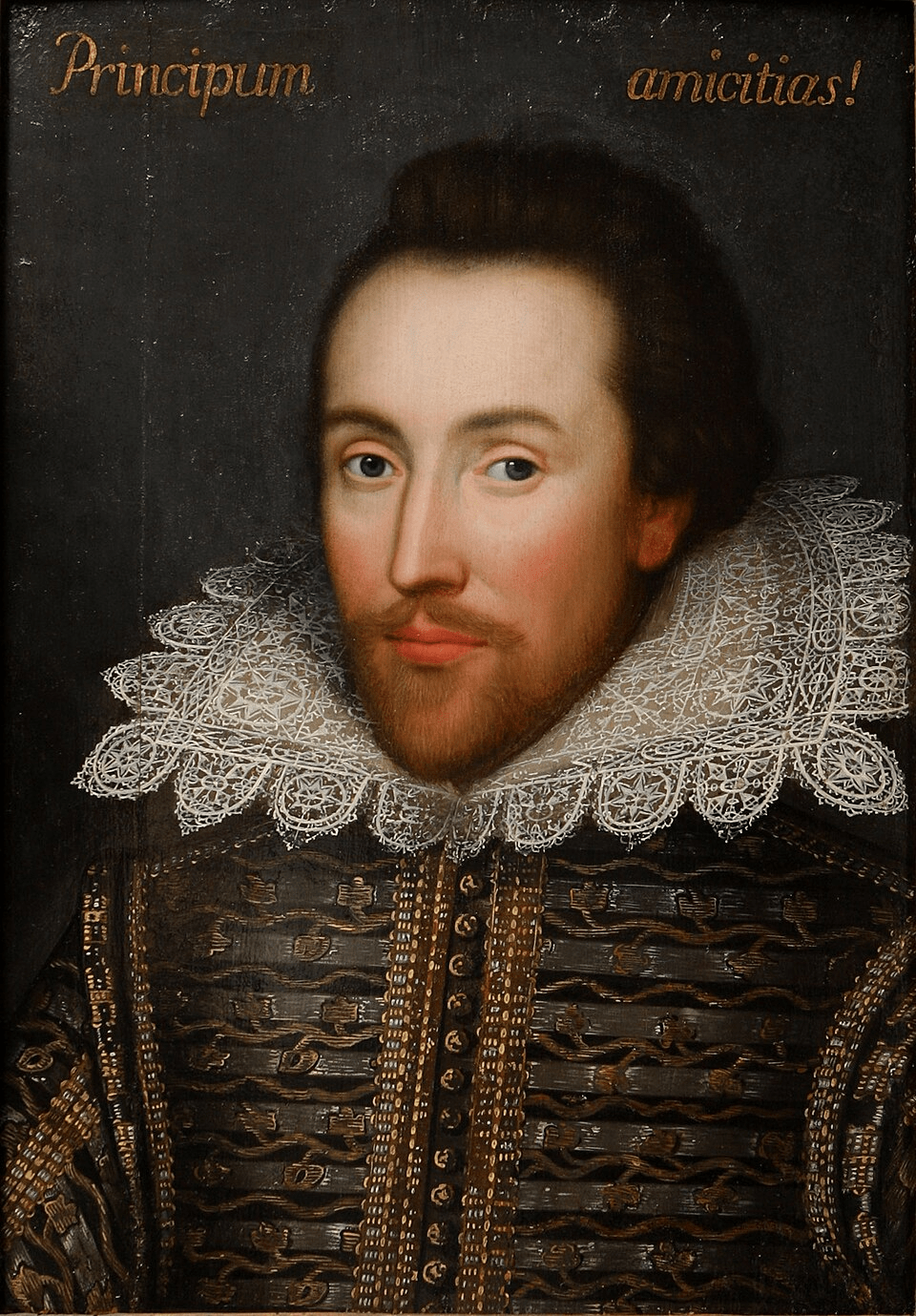
The Cobbe Portrait of William Shakespeare (circa 1610), public domain.

The first post in a series on Shakespeare, pedagogy, and the power of literature to help us navigate ambiguity.

I am a teacher of Shakespeare with a fraught relationship with the Bard. Every time I walk into my upper-level Shakespeare seminar, I hear notes of vocational dissonance, and my imposter syndrome surges.

This tension may have begun when I received a lower-than-expected grade on my Hamlet paper in the ninth grade. Or maybe because most of the performances of his work that I saw before adulthood (and after, if I’m honest) left me feeling like I didn’t quite understand what was going on. Even as I completed my dissertation on 16th-century British literature, my advisor had to nudge me: “You know, you should really let Shakespeare make an appearance.” I did, but reluctantly.

My resistance to Shakespeare wasn’t a response to his canonicity or to problematic depictions of sex, gender, or race—though these issues can be good reasons to evaluate when and how we teach his plays. Perhaps like others who feel pressured by our culture to like Shakespeare but don’t particularly enjoy or understand his work, I resisted him because his plays resisted my interpretive grasp.

Continue reading “Teaching Shakespeare as Vocational Formation”

You Are Not Enough: Limitations Are Essential for a Healthy Vocation

This post discusses the importance of recognizing and embracing personal limitations in professional and academic life. It emphasizes that acknowledging these limits can lead to healthier work-life balance, reduced burnout, and greater vocational fulfillment. The authors advocate for strategic decision-making regarding commitments to enhance well-being and productivity.

A co-authored series on what faculty members need to thrive vocationally.

If we’re being honest, most of us hesitate to admit to our limitations. Instead, we overpromise, overcommit, and sometimes even burn out. We often attempt to skirt our limitations, power through them, or ignore them and hope they won’t trip us again. Yet doing so can lead to a downward spiral of feeling inadequate, hoping that accomplishing something might raise our spirits, but then we reach our limits and feel inadequate once more.

scrabble letter tiles spelling limits
Photo by Markus Winkler on Pexels.com

What if, instead of dodging our limitations or carefully hiding them from others, we accepted them openly and graciously—and considered them as central to a healthy vocation?

Continue reading “You Are Not Enough: Limitations Are Essential for a Healthy Vocation”