

Here’s a confession: my interest in generative AI isn’t really about AI, it’s about our humanity, because vocation work is deeply human work. It requires our individual ability to reflect and to learn, to discern and to decide; it also depends on our collective ability to be human together: to communicate clearly, to hold together some form of civil society, and to pay attention to our neighbors’ needs.
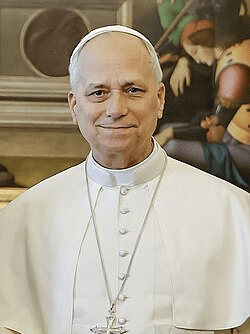
Similarly, Pope Leo XIV’s first encyclical, published in May 2026, is widely seen as being “about AI” when in fact, it’s about our humanity. In the third chapter of Magnifica Humanitas, when the pontiff turns his attention to AI, he’s actually focusing on what it means to be human.
Foundational Commitments
For Pope Leo, the discussion of technologies rests on what he calls “the noble principles of Social Doctrine: the inalienable dignity of the human person, the common good, the universal destination of goods, subsidiarity, solidarity and social justice.”
My consideration of our humanity in light of AI rests on similar commitments and what they mean in relation to the vocation of teaching and learning. A vocational approach to undergraduate education invests deeply in the formation of human beings for purposeful living, simultaneously paying attention to the formation of educators for what that work requires in a complicated world.
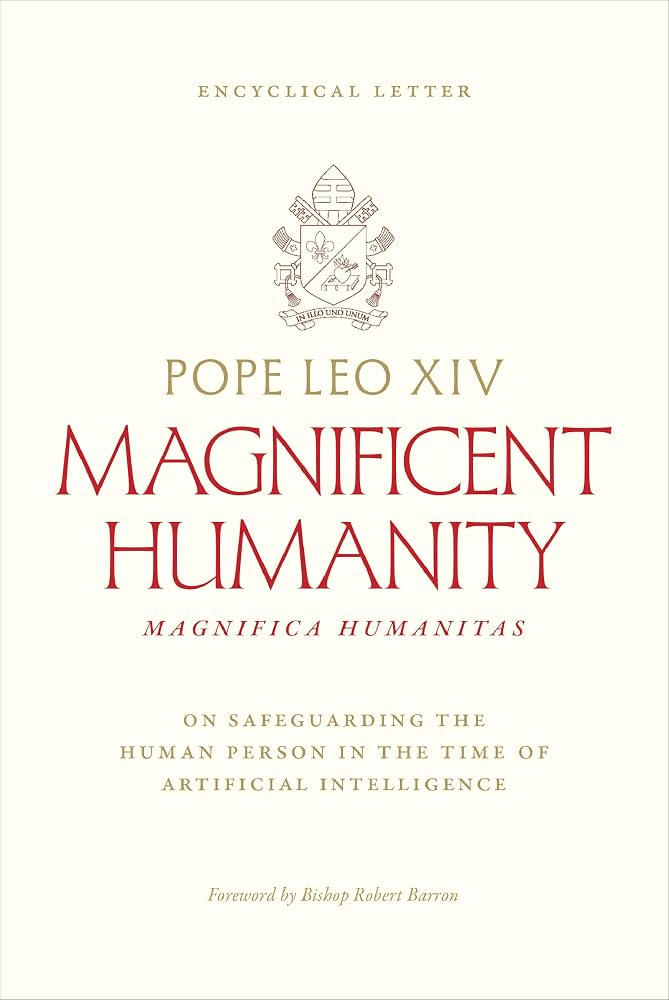
In Magnifica Humanitas, these principles become the criteria for evaluating any and all technological innovations, including artificial intelligence. “They demand,” Pope Leo writes, “that we assess whether the power of digital infrastructures and algorithms truly fosters participation and responsibility, protects the vulnerable, ensures fair access to opportunities and remains directed toward the good of all.”
In the vocation of teaching and learning, fully engaging students in their own formation requires them to sit with challenging questions, to engage with difficult texts, and sometimes, to talk with confounding conversation partners. At the same time, because higher education itself was founded and has been structured in ways that have historically denied access to many groups, my own approach to teaching and learning is always mindful of who is and has been excluded so that we can work toward greater inclusion. When does technology support this work, and when does it actively harm it?
Human Learning and Intelligences
In his encyclical, Pope Leo articulates some of the essential aspects of being human that artificial intelligence cannot mimic. As he writes, “So-called artificial intelligences do not undergo experiences, do not possess a body, do not feel joy or pain, do not mature through relationships and do not know from within what love, work, friendship or responsibility mean.”
Consider experiences of truly transformational learning, your own and that of our students: it is an embodied experience (screen interfaces notwithstanding); it brings joy and pain; it matures over time and with age; it is keenly affected by relationships; and it involves “love, work, friendship,” and “responsibility.” Whether it takes the form of a powerful classroom discussion or a travel course that immerses students in other people’s lives and new perspectives, those who experience it know that lives have been profoundly changed.

Along these lines, Pope Leo argues that machine “learning” is different from the learning that humans do, which he characterizes as “the experience of those who allow themselves to be shaped by life and grow over time through choices, mistakes, forgiveness and fidelity.” We might then best understand undergraduate education as formative training in making choices, learning from and rebounding from mistakes, learning to forgive oneself, and being faithful to one’s values, one’s goals, and the standards of a profession or disciplinary focus.
Technology Is Always with Us
When it comes to the use of technology and devices, Pope Leo points out that:
“The use of AI is never a purely technical matter: when it enters processes that affect people’s lives, it touches on rights, opportunities, status and freedom. Important and sensitive decisions—concerning employment, credit, access to public services or even a person’s reputation—risk being fully delegated to automated systems that do not know ‘compassion, mercy, forgiveness, and above all, the hope that people are able to change.’”
It may be true that devices are now an extended part of our selves; it is also true that being an extension of a self is different from replacing that self. In one of my first years of teaching, before text-to-voice technology became ubiquitous, I had a student who was visually impaired and who was empowered by a free service that read our assigned texts to her. The service didn’t do the assignments for her—it supported her as she did the assigned work. Likewise, an assistive device that helps me hear better cannot replace the sense making that I do in response to what I hear. In the same way, artificial intelligence might help us process information more efficiently, but it cannot replace decisions that we make that need to be informed by compassion and honesty.
Magnifica Humanitas offers a way for us and our human intelligence to relate to technologies like artificial intelligence with this guiding vision and ultimate question: “The creative intelligence of humanity … must remain ordered toward the common good, justice, the care of the vulnerable and creation … Ultimately, the key question remains … ‘does AI make human life on earth “more human” in every aspect of that life?’”
The roots of Pope Leo’s vision likely lie in the work of Latin American liberation theologians and priests like Gustavo Gutiérrez, who lifted up the call from the Second Vatican Council to transform the context for life in this world from “less than human conditions” to “truly human conditions.” As Father Robert Prevost, Pope Leo spent many years of his life serving the people of Peru as priest and bishop, so it’s easy to see in this encyclical a through-line of these theological commitments to human flourishing from his past experiences.
Back to the Future
Over a decade ago, in an essay in At This Time and In This Place: Vocation and Higher Education, I considered the role of technology in our work with students as they discern their vocations. In that moment, our major concerns were smartphones and social media, yet some conclusions remain salient for considering the vocational challenges of AI today. “For all of us,” I wrote, technology “is part of our collective ecosystem, present with particular intensity on our campuses. It needs to be on the agenda in conversations about vocational discernment, if we hope to protect, indeed to develop, a better sense of human flourishing in the contemporary context.”
Human flourishing emerged as the bedrock of my understanding of the vocation of teaching and learning, especially in relationship to technology. Then and now, I find the insights of educational theorist Paulo Freire helpful in his focus on both the humanization and dehumanization that Brazilian peasants experienced in the nascent days of liberation theology.
Technologies both humanize and dehumanize; they can be connective and corrosive. It is a particular vocational challenge to recognize this paradox, and to engage carefully and wisely with AI—at least as much as we do with other elements of culture, politics, industry, and society. Our very humanity—and perhaps more importantly, that of our students—is at stake.
Caryn D. Riswold is professor of religion and the Mike and Marge McCoy Family Distinguished Chair in Lutheran Heritage and Mission at Wartburg College in Waverly, Iowa. She serves NetVUE as a senior consultant helping institutions navigate the vocational challenges of generative AI. For more posts by Caryn, visit her author page on this blog.
