Wendell Berry, who died at 92, was a profound thinker advocating for a redefined understanding of work, economy, and personal calling. His insights emphasize the importance of affection and meaningful engagement with community, arguing that true fulfillment comes from vocation rather than societal definitions of success. His legacy urges individuals to live with purpose and care.
When Wendell Berry died at the age of 92 on August 31, TheNew York Times headline called him a “Writer Who Extolled America’s Agrarian Past,” which doesn’t exactly scream relevance for those of us helping young people discern their present and future vocations. A better headline might have mentioned that Berry was a thinker who urged us to reimagine conventional ideas of work, economy, and success, and to remember the role of affection in discerning and living out our human callings.
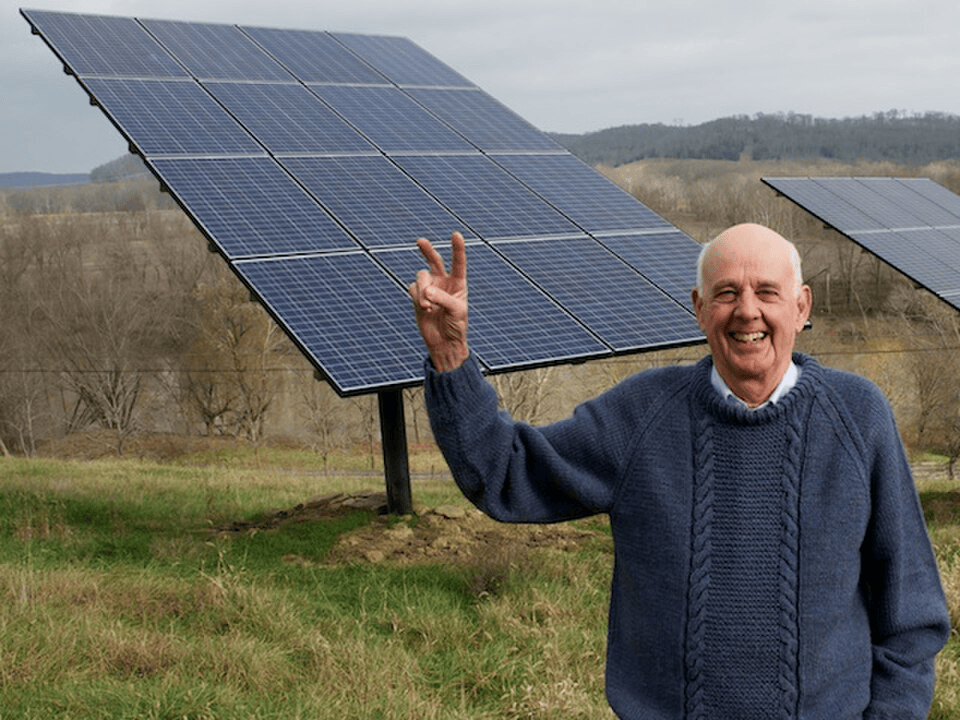
Wendell Berry stands before the solar panels on his farm in Henry County, Kentucky. Photo by Guy Mendes, 2011.
Many readers will immediately associate the name Frederick Buechner with a passage from Wishful Thinking that they know by heart: “The place God calls you to is the place where your deep gladness and the world’s deep hunger meet.” It’s a rich sentence, full of possibility, and has been foundational for many of us in helping students through vocational discernment. But Buechner said a great deal more about vocation, whether in essays or fiction or memoir, and I’d like to explore his wider vision briefly as we mourn his death on August 15, 2022, at the age of 96.
Wikimedia Commons
Many readers will immediately associate the name Frederick Buechner with a passage from Wishful Thinking that they know by heart: “The place God calls you to is the place where your deep gladness and the world’s deep hunger meet.” It’s a rich sentence, full of possibility, and has been foundational for many of us in helping students through vocational discernment. But Buechner said a great deal more about vocation, whether in essays or fiction or memoir, and I’d like to explore his wider vision briefly as we mourn his death on August 15, 2022, at the age of 96.
She called us to re-think who and what sits at the center of our attention in the classroom, on a syllabus, and in a curriculum.
The work of bell hooks (1952-2021) had always been part of my feminist education, in college as well as in graduate school. Many memorials in the last few days have focused on her contributions to women’s studies and black feminist theory since her death on December 15th. It was when I was a postdoctoral teaching fellow in the Lilly Fellows Program in Humanities and the Arts twenty years ago that I came to appreciate bell hooks’ work on pedagogy and the vocation of an educator. Our program’s weekly colloquium on the scholarship of teaching included precious few women authors, and even fewer authors of color, and so when I finally got to read bell hooks and Paulo Freire, I could see the kind of teacher I wanted to become.
We give thanks for the life and work of Douglas J. Schuurman, one of the founding leaders of the contemporary conversation on calling and vocation. Doug passed away on the evening of Saturday, February 15, 2020. Many in the NetVUE community will be familiar with his important book Vocation: Discerning Our Callings in Life (Eerdmans, 2004) and with the more recent collection (co-edited with Kathleen A. Cahalan) Calling in Today’s World: Voices from Eight Faith Perspectives (Eerdmans, 2016). Much of his life’s work was devoted to the task of “retrieving and reforming the Protestant concept of callings for modern times.” He also contributed to theological explorations that broaden the range of women’s callings, serving as co-editor (with Mary Stewart Van Leeuwen, Annelies Knoppers, Margaret L. Koch, and Helen M. Sterk) of After Eden: Facing the Challenge of Gender Reconciliation (Eerdmans, 1993).