

When Wendell Berry died at the age of 92 on August 31, The New York Times headline called him a “Writer Who Extolled America’s Agrarian Past,” which doesn’t exactly scream relevance for those of us helping young people discern their present and future vocations. A better headline might have mentioned that Berry was a thinker who urged us to reimagine conventional ideas of work, economy, and success, and to remember the role of affection in discerning and living out our human callings.

The funny thing is that the idea of being relevant to the industry of higher education would have annoyed Berry more than this headline. He was always an odd fit for the uses made of him in academia. His novels, essays, and poems will continue to appear in many syllabi, even as many of them openly question or even ridicule at times the value of formal education. In his essay, “The Joy of Sales Resistance,” he lists a few “simple truths” that must be accepted to join the ranks of the properly educated, including this one that stands out for its sardonic skepticism: “A great university has many computers, a lot of government and corporation research contracts, a winning team, and more administrators than teachers.”
Berry believed that what we typically call education too easily becomes an extension of the abstracting forces of industrialism—a way of converting material intimacies into statistical knowledge, which may then run roughshod over the supposed inefficiencies of affection. In other words, within his apparently cranky critique is a fierce defense of the tender beauties of creaturely life. The trick is to accept Berry’s criticism of compelling abstractions, which readily evaporate anyhow.

I grasped this insight the first time I met Wendell, when my friend Greg Hillis brought me along to spend Sunday afternoon in Wendell and his wife Tanya’s kitchen. I had prepared in exactly the wrong way for the experience—boning up on his essays like I was prepping for a grad school seminar, ready to impress the teacher, even as this effort was also an expression of my genuine appreciation for the brilliance of his work.
Early in our conversation Wendell looked at me and said, “Justin, did you come here to pay me compliments? Because that’s sure to make for a boring afternoon. How about we talk about something interesting?” I soon realized the kindness of this mild chastisement, and we talked for hours. It was the most Wendell-Berry way to meet the man who had written that abstract intelligence isn’t worth a damn without genuine affection. After all, if you believe time is precious and creaturely life is good, then getting to know a person will always trump even the most complimentary of abstractions.
This approach to life is profoundly relevant for vocational discernment. In 2007, a few years before I arrived at Bellarmine, Berry gave the commencement address, in which he told graduates that to live well they would need
to understand that the logic of success is radically different from the logic of vocation. The logic of what our society means by “success” supposedly leads you ever upward to any high-paying job that can be done sitting down. The logic of vocation holds that there is an indispensable justice, to yourself and others, in doing well the work that you are “called” or prepared by your talents to do.
The phrase “to yourself and others” is important. Berry knew that life satisfaction and the indispensable justice of vocation are in fact directly correlated. The inverse relation between success and satisfaction is also potentially so. “The logic of success insinuates that self-enlargement is your only responsibility,” he continued,
and that any job, any career will be satisfying if you succeed in it. But I can tell you, on the authority of much evidence, that a lot of people highly successful by that logic are painfully dissatisfied. I can tell you further that you cannot live in a career, and that satisfaction can come only from your life.
He was telling me the same thing that first time we talked in his kitchen: “Hey there, professor, pretend you left your c.v. in the car, alright? Life’s happening right here.”
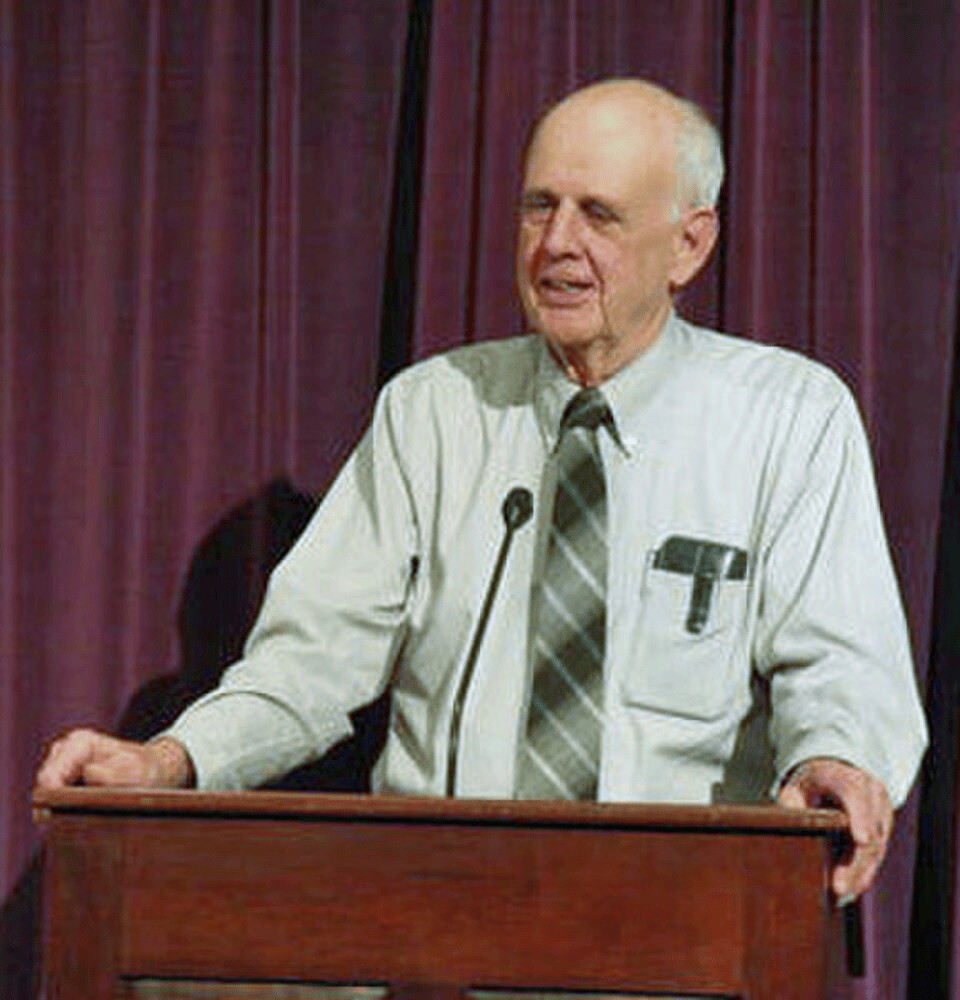
By no stretch does this mean that Wendell Berry was opposed to working for a living, though he certainly was opposed to bad work: “To work without pleasure or affection, to make a product that is not both useful and beautiful, is … to make shoddy work of the work of God.” He also did not think that to do good work required being a farmer and a sabbath poet. But it does require paying attention to creation—to what has been given to us in the actual world and the fundamental and ongoing work of attending to and imagining the world. As he said in his 2012 Jefferson Lecture,
For humans to have a responsible relationship to the world, they must imagine their places in it. To have a place, to live and belong in a place, to live from a place without destroying it, we must imagine it. By imagination we see it illuminated by its own unique character and by our love for it.
Particularly at a time when most of us “now share with the most powerful industrialists their remoteness from actual experience of the actual world”—and when we are feeling that remoteness as loneliness and isolation and numbness to our fellow creatures—this imagination could not be more concretely valuable.
But do we need to sacrifice something of real value to practice imagination and to work from affection in this way? Wendell Berry’s gift to those who seek to discern their callings is his forceful rejection of this calculus. He reminds us that to live is to be a creature responsible and responsive to creation, and to be part of communities that are worthy of our affection and care. Mercifully, there is a depth of satisfaction that emerges from this “indispensable justice” that cannot be faked. In this claim, but perhaps more fully in his poems and novels, Berry helps us to imagine and live into a courageous resistance to so many of our unsatisfying logics of fulfilment.
You might think, especially nowadays, that a person who says no to computers and other forms of technological “advancement”—who writes poems about geese and novels about “small” lives, refuses to move up or move out, and corresponds almost exclusively by letter—you might assume that such a person would be consigned to a lesser life, a life emptier of the stuff that we tell ourselves (and are told) makes us real and worthy and visible and valid. But you would be mistaken.
If anything, the days since Berry’s death have clarified just how well known he was. And I don’t mean famous. By now I must have read hundreds of sincere and personal expressions of gratitude for his wisdom and friendship. None of them has made me feel that my own small friendship with Wendell was less than real. Affection, it turns out, is not a zero-sum game. And thank God for that.
The demanding justice of vocation—of attending with care to the communities to which we belong—is also an abundant mercy and a sure joy.
May it be so for us and for our students.
Over the years, a number of contributors to Vocation Matters have written posts about the importance of Wendell Berry to vocational studies and the NetVUE community. We invite readers to revisit these posts in honor of his memory.
Justin D. Klassen is professor of theology and religious studies at Bellarmine University in Louisville, Kentucky, where he teaches a range of courses in philosophical theology and religious ethics. His scholarship focuses on religion and ecology, theological responses to systemic injustice, and the role of awe in moral formation and in the quest for a meaningful life. He is a NetVUE Faculty Fellow and a NetVUE Scholar, having contributed to the forthcoming NetVUE Scholarly Resources Project volume, Vocation, Higher Education, and the Future: Imagining Possibilities, Cultivating Practices. For more posts by Justin, please visit his author page on this blog.
Beautiful remembrance. Thank you. Berry was so down to earth and rejected any self-glorification
or “careerist” moves. I find it refreshing!