

A series exploring the connections between vocation and pedagogy.
A capstone course can be a deeply tender experience for graduating students, reflecting their vulnerability as they complete their degrees. Life after college, with its many promises and possibilities, is rapidly approaching. These possibilities might feel more limited than some students anticipated as they experience blocked, conflicted, fractured, and unexpected callings (to use the framework that Bonnie Miller-McLemore describes in Follow Your Bliss and Other Lies about Calling). When a student enters a capstone course—which often requires significant reflection on a student’s college experience—it can sometimes aggravate blisters caused by their current efforts to discern and live out their vocations.

When I inherited the capstone course for my college’s science division, it had been designed for students who were planning to attend graduate school and to continue into scientific careers. The course helped them integrate their scientific knowledge and skills as they prepared for those next steps. But for many students, the next steps weren’t obvious. Some students told me the content was frustrating and irrelevant because they were not going to use their scientific degree. Other students struggled to attend because the course served as a painful reminder that they didn’t have a job in the field that they had spent the last four years preparing for.
On the surface, I needed to find ways to motivate students to engage with the capstone course. The deeper problem, however, was that students couldn’t see value in the course or the discipline when they thought they weren’t going to continue in science. Students focused on the work they weren’t going to do instead of the set of skills they had developed. Regardless of what opportunities were available for further education or paid work, I wanted students to think more broadly both about their future possibilities and the ways their investment in science informed and shaped those possibilities. I wanted students to look at the course and discipline through a vocational lens. Not only did they need to think more creatively about how their discipline prepared them for many kinds of work, they needed to also think about areas of their life beyond paid work where they might want to engage and contribute.

To encourage a broader vision of possibilities, I added a policy proposal project to the course to supplement and support its scientific content. At the beginning of the semester, students identified an issue they cared about and that was informed by published data. They developed a policy proposal to an elected official in their town or county who had local decision-making power. The proposals ranged from water treatment considerations to changing streetlights to reduce light pollution to funding for the upkeep of a local park. None of the students had written a policy proposal before, so I carefully scaffolded the assignment with support, feedback, and reflection along the way.
As they drafted their proposals and provided feedback to each other, students saw how the skills they developed in understanding, using, and explaining data allowed them to engage with their local community. Throughout the semester, students completed a series of personal reflections on how they were using their data analysis skills, why these issues were important for their community, what values and experiences from their past informed their engagement with the issue, and how they could continue to use their scientific skills in service to their communities. On the last day of class, they sealed their finished proposals in envelopes and walked together to the campus mail services to send them to their elected officials. In the following months, I often received notes from excited students telling me that someone had responded to what they had written.
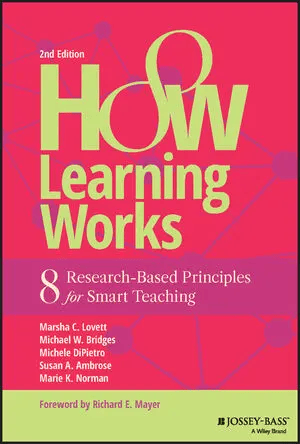
When I added the policy project and associated reflection assignments to the capstone course, engagement in the course increased significantly. Even students who were not going to continue to work in science remained engaged in the scientific conversations throughout the semester. As I’ve written in a previous post, the science of learning can help us understand why this outcome is not surprising. In How Learning Works: Eight Research-Based Principles for Smart Teaching, the chapter “What Factors Motivate Students to Learn” shows that connecting course skills and content to broader life experience increases engagement with a course. Students are more likely to invest when they understand how things that happen within a classroom matter more broadly in their studies and in their life. By introducing the policy project, I prompted students to explore how their analytical skills could help them engage with and serve their communities. The project created space for additional conversations about how scientific expertise could support engagement with their communities and the world, regardless of whether their paid work was in science. As Darby Ray describes, this kind of engagement helps broaden students’ thinking by “bringing the world into full view as a vitally important dimension of vocation.”
In this way, integrating vocation into the classroom encourages teachers to help students connect what they are learning in a course to other things that are important in their lives. Vocation-informed reflections, discussions, and pedagogies can motivate learning and engagement across all the content of a course. Conversations about vocation or projects informed by thinking vocationally invite students to bring their interests, experiences, questions, and hopes more fully into the classroom. When paired with intentional and effective pedagogies, this creates a powerful opportunity for students to better understand what they are learning, why they should care about learning, and how it might matter in their lives.
Closing Reflections
As I conclude this series, let me share some final reflections on the connections I see between vocation and pedagogical practice. The work of vocation and the work of excellent teaching are deeply intertwined projects. Teachers lay the groundwork for vocational exploration in the classroom long before the first conversation. Strategic pedagogical decisions serve to communicate and reinforce the vocational hopes a teacher has for students. Research-informed pedagogical practices create the conditions for students to experience belonging, a necessary precursor for vocational exploration. Intentional pedagogical choices then support and make room for the conversations that will unfold. An appropriately scaffolded approach—informed by the science of learning and that focuses on and creates space for skill development—cultivates skills for both learning and vocation. Student engagement increases when they are supported in thinking more broadly about what is happening in a class and how it informs what happens outside that classroom.
The work of vocation and the work of excellent teaching are deeply intertwined projects
If you teach college students in the classroom, I encourage you to think carefully about how you set the table for them when they enter your course. Develop a clear narrative that connects the class and vocational themes and choose pedagogies that support the narratives you value. Be explicit about what you hope unfolds in your classroom so students can broaden their imagination about what is possible and what they can do with the skills they develop in your class. Create space to practice and develop those skills that serve both disciplinary expertise and vocational exploration. Take advantage of the unique social construction of the classroom space that allows students to try things together and you to shepherd exploration in creative ways.
There are many good resources from research in the science of learning that can help you do this well. Bringing vocation into the classroom does not have to detract from the other learning goals but can instead support students’ overall learning. When you engage students with vocation-informed pedagogies, students will learn something (or more of something) of value, and you will have the opportunity to experience connection, community, and inspiration as you walk alongside them in their learning and vocational journeys.
Rachael Baker is the associate director of NetVUE. In this position, she leads a wide range of initiatives designed to help member institutions implement vocation-informed programs and practices for faculty members, staff, and students. Among other projects, she leads NetVUE’s efforts to provide faculty and staff development opportunities for member institutions, as well as assistance with the assessment of their grant-funded projects. She also holds a faculty appointment as associate professor of chemistry at Aquinas College in Grand Rapids, Michigan. Rachael was a participant in the 2021 NetVUE Teaching Vocational Exploration seminar, which encouraged her to develop curriculum to engage students with virtue practices in courses across their programs, helping students engage thoughtfully in communities and teams. Visit her author page on this blog for all the posts in this series, where you can also find other posts by her.