
A series on the impact of intentional living communities on young adults as they explore and discern their vocations.
In the spring of her sophomore year, Katerina Sasieta lived in the woods of the upper Midwest. Halfway across the country, Gina Ciliberto spent her sophomore and junior years off campus in the Bronx. Neither were alone; they’d joined intentional communities sponsored by their colleges. Years later, Katerina and Gina are both clear: if they hadn’t found purpose and belonging in those communities, they might have transferred or dropped out of college altogether.
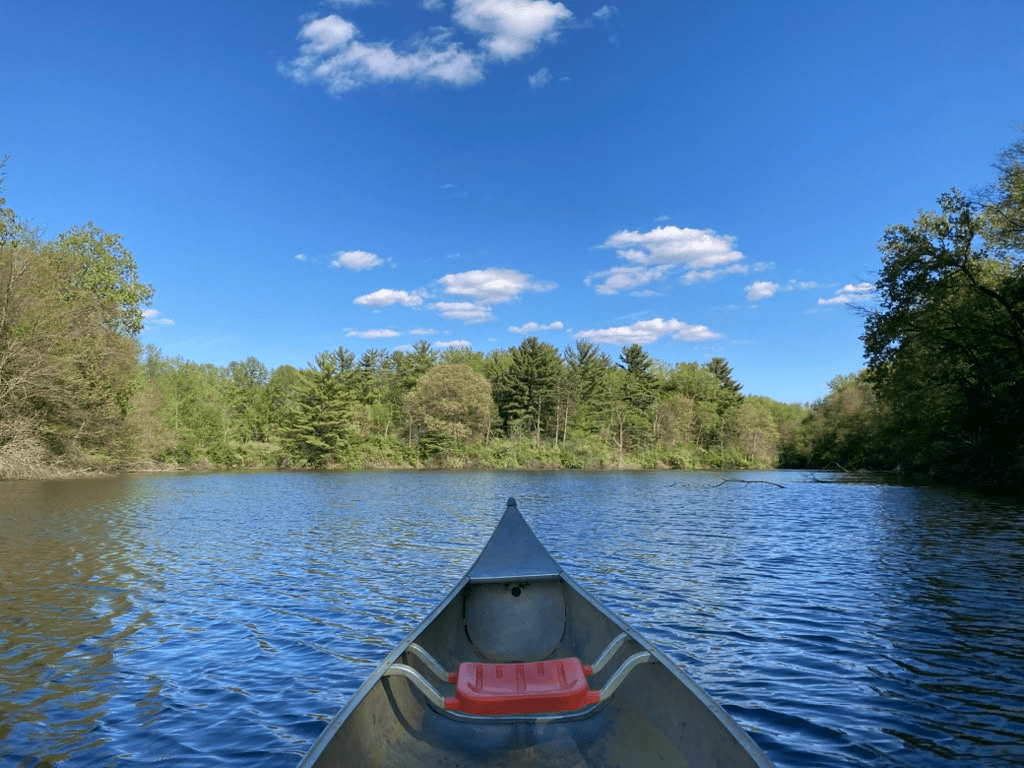
An intentional community is a group of people who live together and share values, goals, and a lifestyle. From pilgrim colonies and convents to hippie communes, intentional communities are a unique part of American history. The distinctly American blend of religious freedom, freedom of expression, colonialism, and entrepreneurship has produced many utopian experiments.
In this context, American colleges and universities have also experimented with intentional community as an alternative model for student housing. Intentional communities may increase student retention, belonging, and affinity. As a former ministry coordinator at DePaul University and a long-time resident of intentional communities, I’ve seen how communal living can transform young adults.
This four-part series introduces four models of communal living through profiles of their alums. I asked each of them to explain how living in an undergraduate or post-graduate intentional community has shaped their vocation. Each of their communities had a different emphasis—and they all attended very different kinds of colleges and universities—but each of the participants have pursued creative, outside-the-box careers and lifestyles. They share a strong sense of vocation that they link to their time living in these intentional communities.
In this first post, I feature a student who lived at Green Oaks, a curricular intentional community program at Knox College in Illinois. The Green Oaks Term takes students off campus to build relationships and to study place and environment. In the three pieces that follow, I will be focusing on an off-campus co-curricular community in the Bronx, a network of properties that house students in Ann Arbor, Michigan, and a Catholic faith-based community in Chicago.
Katerina Sasieta and Green Oaks
When Katerina Sasieta visited the wooded Green Oaks campus for the first time, she knew that she had to live there. “If I hadn’t been accepted to Green Oaks,” she says, “I might’ve left Knox. Everyone seemed so happy spending their days outside, working together, and singing together.” She did the Green Oaks Term in the spring of her sophomore year at Knox College, and she calls it the best ten weeks of her life.
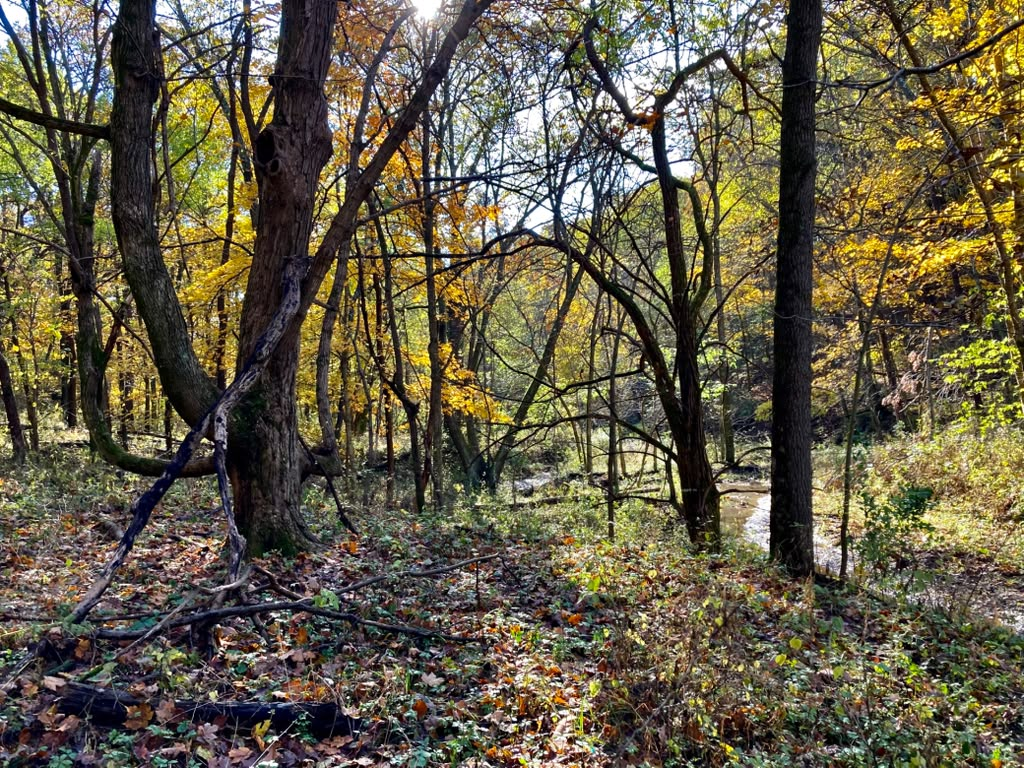
Each spring, a dozen Knox College students build a community in the woods. Green Oaks may be just twenty miles from the main campus in Galesburg, Illinois, but to the “Oakies,” it might as well be a world away. The Wi-Fi is poor, cell service is weak, and personal vehicles are not allowed. Oakies forgo extra-curriculars, parties, and trips to the convenience store. But Green Oaks Term should not be defined by lack. Intentional community, interdisciplinary experiential education, and relationship with the land are hallmarks of a term that can be more transformative than study abroad.
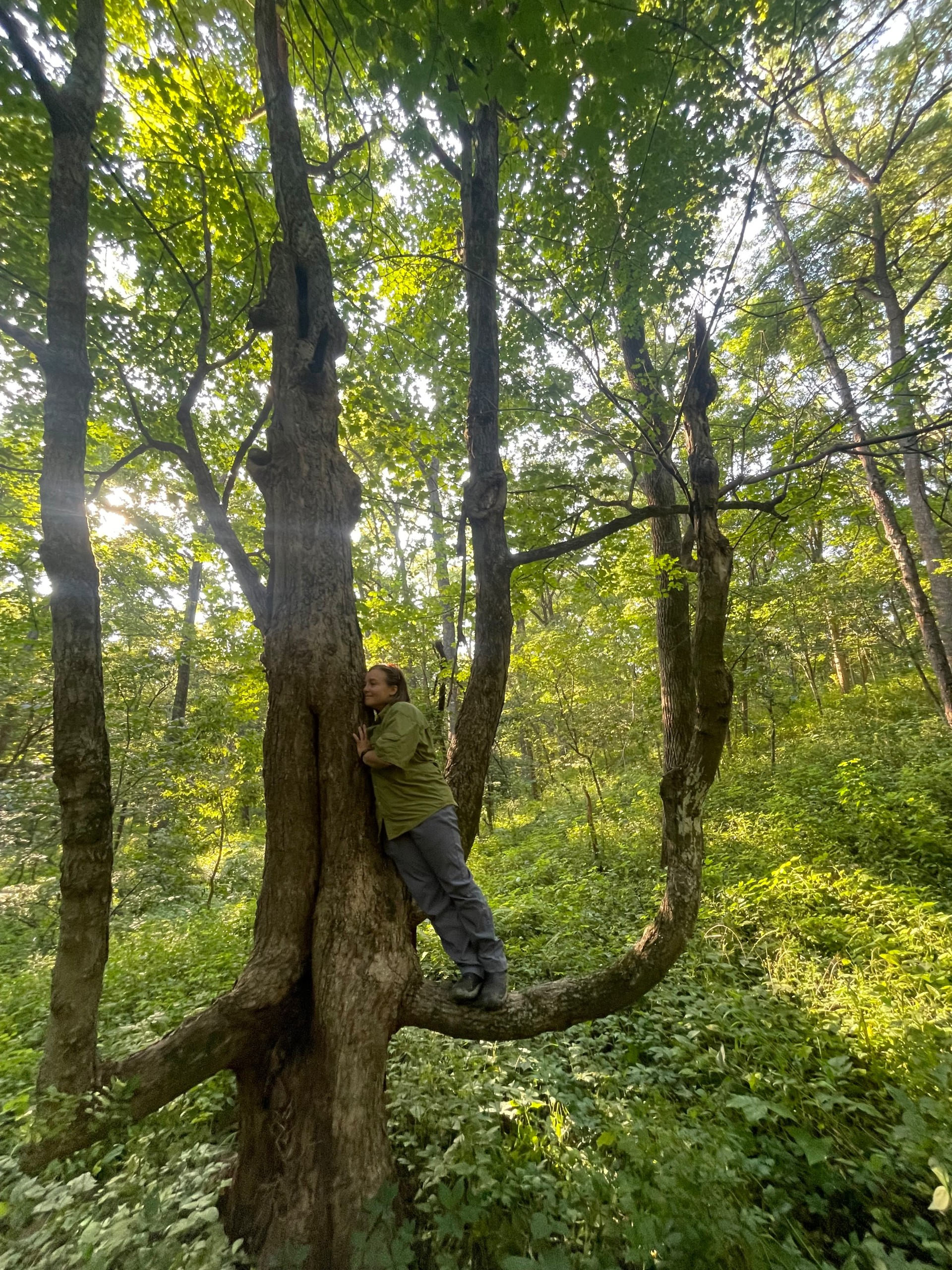
Green Oaks is located on 700 acres of lake, woods, and restored prairie. Despite the sheer size of their outdoor campus, students develop intimate relationships with a particular place. Each student wanders the land until they find their “spot.” Katerina found hers by the south creek, under a sugar maple with big, low branches. Students’ coursework—art, biology, and anthropology—is rooted in the land, and especially in their spots, where everyone must spend at least one hour a day. They work on assignments, rest, hang out, reflect, and watch the place change with the seasons.
Before they move to Green Oaks, though, students spend a term in preparation. In the winter they take a half-credit class in which they build relationships and lay the foundation for community life. This preparation includes dividing responsibilities: students work in “chore groups” of three or four people that take turns cooking and cleaning. They also share community with a post-baccalaureate fellow, a program alum who accompanies them through the term. Their professors also take turns living at Green Oaks with the group.
Six years after graduating, Katerina works as an arborist with a large tree-care company in Chicago. She spends her days outside, climbing and cutting trees. Katerina finds great purpose in this work, telling me that she understands it as a vocation. That calling has its roots—pun intended—in her time at Green Oaks. “Everything I know about trees started during Greek Oaks,” she says. “I feel very clear that I am called to this work right now.”
Because of Green Oaks, Katerina knew she wanted to work outdoors with other people. Tree-care is extremely relational, she explains. You must make a tree fall without harming people or property. There isn’t much margin for error. In the city, humans and trees live in a give-and-take relationship, which is especially clear as tornado alley moves east and storms rattle the region. And this work—which requires both delicacy and physical strength—cannot be done alone. At Green Oaks, Katerina and her community conducted controlled burns on the prairie. Tree-care similarly demands teamwork in a high-stakes situation.
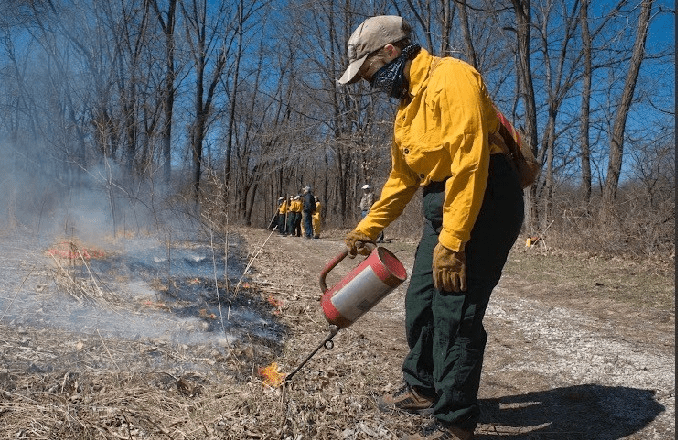
Katerina graduated from Knox with a major in music and a minor in peace and justice studies. When I asked how her Green Oaks term shaped the rest of her academic studies, she told me about her final undergraduate project: She studied community singing as a tool for listening, reconciliation, and social cohesion. This hearkens back to Katerina’s initial call to Green Oaks: singing. She shares how evenings singing, swimming, and telling stories drew the community together.
Green Oaks even oriented students to the broader ecosystem of midwestern intentional communities. The program included field trips to other communities like Dancing Rabbit Ecovillage. On those trips, students experienced other ways of living after graduation. Katerina has continued to live communally, most recently on a farm in Maryland and then in a spiritual community in Chicago.
“No other class awakened my senses like this or gave me such an understanding of how to show up in the world,” Katerina says. “The embodiment was powerful. It was a radically different life for a lot of people, especially those from cities like Chicago. I learned that everything has a name. Everything can be known if you take the time to have a relationship with it.” For Katerina and her peers, the land acted as both a teacher and community member. The human and more-than-human relationships she nurtured at Green Oaks continue to reach tendrils into all dimensions of her life: Her vocation emerged from that web of relationship.
Abby Rampone is a writer and ministry professional in Chicago. Her writing about religion and intentional community appears on her Substack, Love in Community. She previously worked as a ministry coordinator at DePaul University and holds degrees from Union Theological Seminary and Williams College. She participated in the 2026 NetVUE Writing Colloquy.
What a great first piece! I can’t wait to read the rest of the series.