The “Indispensable Justice” of Vocation: Remembering Wendell Berry

Wendell Berry, who died at 92, was a profound thinker advocating for a redefined understanding of work, economy, and personal calling. His insights emphasize the importance of affection and meaningful engagement with community, arguing that true fulfillment comes from vocation rather than societal definitions of success. His legacy urges individuals to live with purpose and care.

When Wendell Berry died at the age of 92 on August 31, The New York Times headline called him a “Writer Who Extolled America’s Agrarian Past,” which doesn’t exactly scream relevance for those of us helping young people discern their present and future vocations. A better headline might have mentioned that Berry was a thinker who urged us to reimagine conventional ideas of work, economy, and success, and to remember the role of affection in discerning and living out our human callings.

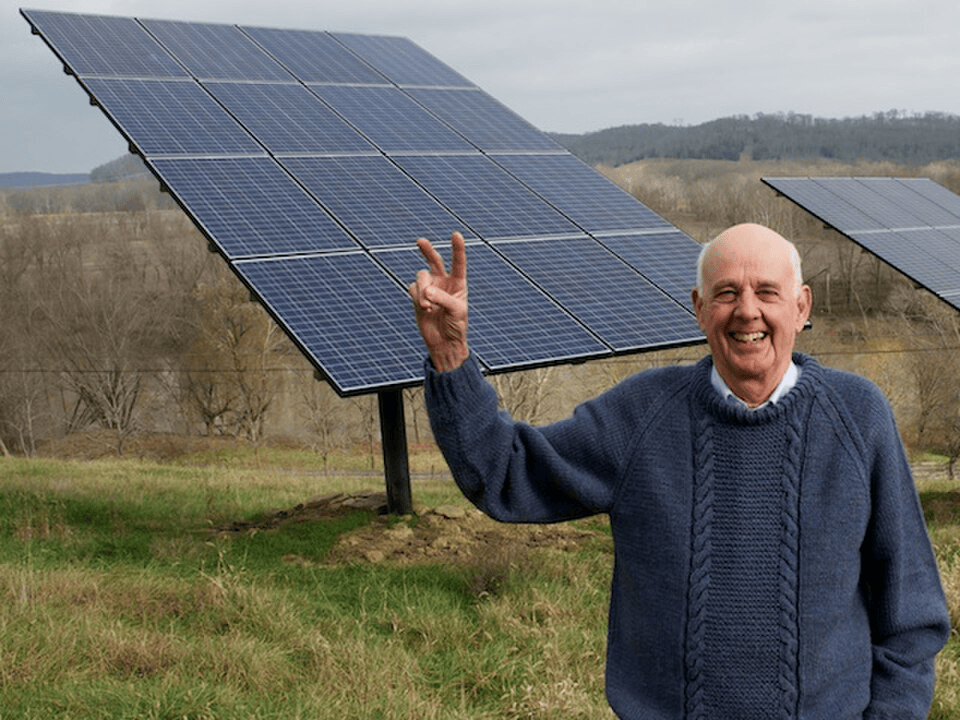
Wendell Berry stands before the solar panels on his farm in Henry County, Kentucky. Photo by Guy Mendes, 2011.
Continue reading “The “Indispensable Justice” of Vocation: Remembering Wendell Berry”

Season Six Highlights of Callings Podcast Is Now Available

NetVUE’s podcast Callings released a bonus episode focusing on vocational advice for undergraduate students. Hosts Erin VanLaningham and John Barton curated insights from various guests, emphasizing listening, perseverance, and the virtues. This resource aims to enhance educators’ interactions with students, fostering deeper reflections on vocation and meaningful life choices.

At the beginning of every academic year, NetVUE’s podcast Callings releases a bonus episode that highlights key conversations from the previous season. This year, Callings’ hosts Erin VanLaningham and John Barton have selected a number of excerpts that serve as advice for undergraduate students, featuring insights from literature professors, psychologists, theologians, and leaders in higher education renewal—all of whom care deeply about the shared work of supporting the collective work of vocational exploration. These guests share professional advice and personal stories as they emphasize the nuance and complexity of what it means to live a good life, encouraging listeners to ask good questions, to be curious, and to listen to self and others.

Some of the guests featured in this episode of Callings. Top row (from left to right): Michael Lamb, Willie James Jennings, and Barbara Brown Taylor; bottom row (from left to right): Angela Duckworth, Lee C. Camp, and Almeda M. Wright.
Continue reading “Season Six Highlights of Callings Podcast Is Now Available”

Hope, Resonance, and Work that Matters: Reflecting on Love’s Braided Dance

This post offers three reflections on this year’s selection for NetVUE’s Big Read program, Norman Wirzba’s Love’s Braided Dance: Hope in a Time of Crisis. Each writer provides their own response and reflection on the issues they found most significant with the intent to spark further discussion across the network.

A series of reflections on Norman Wirzba’s Love’s Braided Dance: Hope in a Time of Crisis and NetVUE’s 2026–2027 Big Read program.

In the first chapter of Love’s Braided Dance: Hope in a Time of Crisis, Norman Wirzba observes that to harness the powerful joy of authentic embodiment for our shared work, “people need the support of a loving community that affirms and encourages them.” One of the purposes of NetVUE’s Big Read program is to foster this kind of support at its member institutions and to do so by reading a book like Love’s Braided Dance together in community. Such communal meaning-making has the potential not only to help us all deepen our practices of vocational exploration, but also to affirm and encourage us in the process.

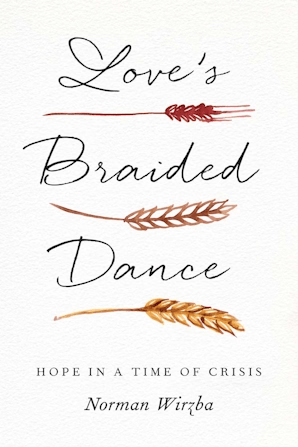
Book cover for 'Love's Braided Dance: Hope in a Time of Crisis' by Norman Wirzba, featuring artistic lettering and braided wheat illustrations.

To that end, Vocation Matters has invited three colleagues—Tara Russey, Craig Mattson, and Anna Stewart—from across the network to reflect on this year’s Big Read. In their reflections, they share powerful glimpses into what moved them and striking insights into what they found significant. In this way, they illustrate another key point from Wirzba’s opening chapter: “The most important thing” to do, he writes, “is to act on the conviction that your community needs you and is calling you to contribute in some way.”

As you reflect on their contributions, please consider them as points of departure as you and colleagues explore what significance this book might have at your institution. I think you’ll agree that we all need, and will be enriched by, the loving, resonate insights that each writer offers us.

Continue reading “Hope, Resonance, and Work that Matters: Reflecting on Love’s Braided Dance”

Assessing Community-Engaged Learning to Deepen Vocational Reflection

The final post in this series discusses the impact of community-engaged learning on students’ vocational exploration. It emphasizes the importance of reflective practice in fostering deeper learning. By revising assessment strategies and prompts, the authors enhanced students’ understanding of teamwork and intercultural competency, leading to meaningful civic engagement and a greater sense of personal responsibility within their communities.

The final post in a series on the role that community-engaged learning can play in vocational exploration and discernment.

As educators, we want to know that our efforts impact our students, but assessment is difficult, especially when we seek to measure learning about vocation. It requires that we—alongside our students—engage in “continuous, connected, challenging and contextual” reflective practice, as recommended by one practitioner’s guide. Our last post illustrated how teamwork can be a kind of vocational praxis, offering students the opportunity to discover common ground in community with others. In our final post, we describe the outcomes of Heather and her colleague Erin Olsen-Telles’s learning, paying particular attention to the impact of embedding reflection in community-engaged learning on students’ vocational discoveries. By redesigning assessment strategies, we came to understand that reflection grounded in community contexts empowers students to engage in the deeper learning that opens the door to vocational discernment.

serious african american male with planner on city riverbank
Photo by Ketut Subiyanto on Pexels.com
Continue reading “Assessing Community-Engaged Learning to Deepen Vocational Reflection”

Vocational Ambiguities: Confronting Contradictions in The Merchant of Venice

The second post in a series on Shakespeare, pedagogy, and the power of literature to help us navigate ambiguity in our callings.

woman in historic costume with poetry book
Photo by JJ Jordan on Pexels.com

By most estimations, reading Shakespeare carries little value as career preparation. No one—not even English majors—will be asked in a job interview to prove what they know about Shakespeare. But while knowing the content of his plays may not mean much, I’m convinced that the process of reading them may very well shape our vocational trajectories.

It did, at least, for my student MR.

Aspiring to attend law school, MR was gregarious and relational, always willing to engage and converse and dressing with a zany flair. But underneath this whimsy was a penchant for precision. They liked things crystal clear and were uncomfortable when they were in shades of gray, especially when it came to assignments and grades. In their eyes, a black-and-white answer could always be deciphered if we just took enough time to find it. This love for exactitude was both an asset and a liability for an aspiring attorney.

Continue reading “Vocational Ambiguities: Confronting Contradictions in The Merchant of Venice”

Thriving in Academia: The Power of Friendship and Community

Faculty members at small liberal arts colleges often experience isolation despite a focus on community. This post emphasizes the importance of developing friendships and academic partnerships for personal and professional growth. Connections with peers, mentors, and colleagues from other institutions foster resilience and collaboration, ultimately enhancing scholarly productivity and overall well-being.

A co-authored series on what faculty members need to thrive vocationally.

One of the seeming paradoxes of faculty life at a small liberal arts college is that although these institutions often champion community, faculty members frequently work in isolation. And despite the fact that research and publication have become increasingly collaborative, higher education has a tendency to view the “life of the mind” largely as an individual pursuit. University tenure and promotion criteria often reinforce this view, rewarding individual work over more collaborative projects—particularly in the humanities. Within this context, collaboration may be further inhibited by the fact that faculty are frequently hired as one of a few experts—and sometimes as the only one—in their discipline or sub-specialty. A recent article from Inside Higher Ed suggests that the key to scholarly productivity for faculty members working at teaching-intensive schools is to just be more efficient, side-stepping these other very real constraints.

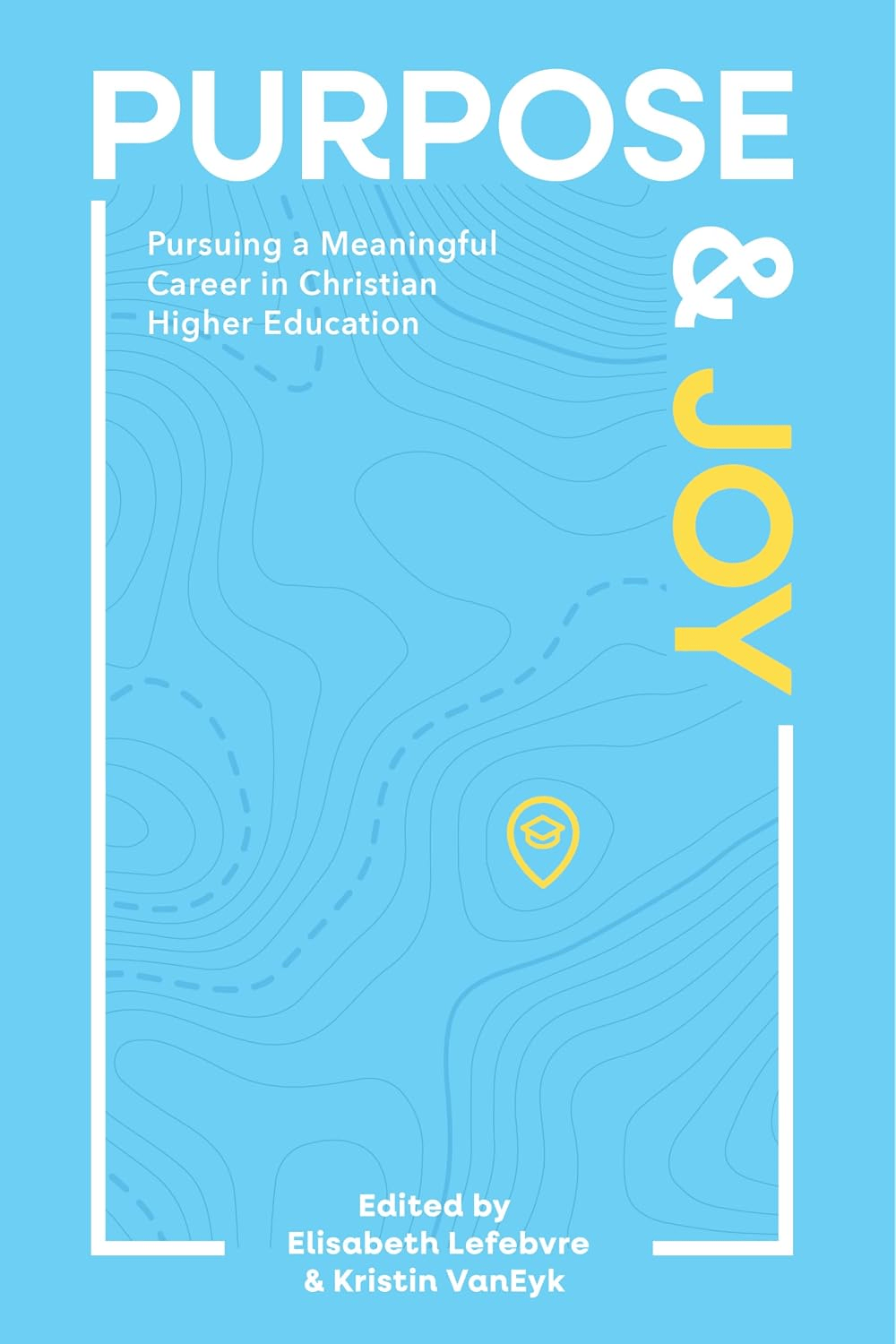
In this post, we encourage faculty members to cultivate a kind of scholarly resilience that doesn’t expect you to do more with the same number of resources; instead, we should build resilience by generating “wealth in people” that we gain through belonging to a community, as Christine Jeske describes in her essay in the volume we edited, Purpose and Joy: Pursuing a Meaningful Career in Christian Higher Education. Friendship within academic communities can take many forms, but we focus here on generative friendships—what we term “academic partnerships”—that encourage personal and professional growth, and thriving. As Paul Wadell writes, “One of the great unpayable debts of friendship is to realize that our friends helped us become better than we ever could be by ourselves.”

Continue reading “Thriving in Academia: The Power of Friendship and Community”

“To Be Idle and Blessed”: A Wandering Path for Vocational Discernment

This post emphasizes the therapeutic benefits of nature walks for vocational exploration. It highlights how being “idle and blessed” fosters self-reflection, creativity, and deeper understanding of one’s calling. Citing historical and scientific evidence, it encourages incorporating mindful walks into daily life to promote clarity and personal insight in a busy world.

A series drawing on a therapist’s insights into play, wandering, and presence in relation to vocational exploration and discernment.

I first came upon the tantalizing phrase, “idle and blessed,” in Mary Oliver’s poem, “The Summer Day”:

I don’t know exactly what a prayer is.
I do know how to pay attention, how to fall down
into the grass, how to kneel down in the grass,
how to be idle and blessed, how to stroll through the fields,
which is what I have been doing all day.

It is in such unhurried states—with an open heart and peaceful mind—that callings often stir. I have found that nature walks offer a practice of intentional “idleness,” which allow the mind to wander and reflect, to stir rich self-understanding “blessedly” and to deepen vocational discernment.

Continue reading ““To Be Idle and Blessed”: A Wandering Path for Vocational Discernment”