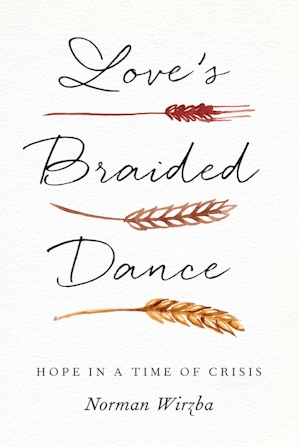
Norman Wirzba’s Love’s Braided Dance. NetVUE’s Big Read for this academic year, reframes hope as an active, loving commitment to life rather than a sense of superficial optimism or a possession. In a NetVUE webinar, he urged educators to listen to young people’s legitimate skepticism of discourses of hope while recovering hope’s significance and potential to mobilize us to make the world more just. Rooted in Christian theology but broadly accessible, the book connects hope, vocation, community, place, and meaningful action.
A conversation with Norman Wirzba that is part of a series of reflections on his book Love’s Braided Dance: Hope in a Time of Crisis and NetVUE’s 2026–2027 Big Read program.
Norman Wirzba
In a time of crisis, the question—“What gives you hope?”—is, for Norman Wirzba, the wrong question to ask, for he argues that hope is not something that we can possess. Instead, he wonders,
“What if hope is … a loving way of being that is animated by an affirmation of the goodness of this life, a practiced way of life rooted in the conviction that this life is worth cherishing, defending, and celebrating?”
Accordingly, he believes that we should shift the question from “What gives you hope?” to “What do you love?” and “How does this love change what you hope for?”
This post offers three reflections on this year’s selection for NetVUE’s Big Read program, Norman Wirzba’s Love’s Braided Dance: Hope in a Time of Crisis. Each writer provides their own response and reflection on the issues they found most significant with the intent to spark further discussion across the network.
A series of reflections on Norman Wirzba’s Love’s Braided Dance: Hope in a Time of Crisis and NetVUE’s 2026–2027 Big Read program.
In the first chapter of Love’s Braided Dance: Hope in a Time of Crisis, Norman Wirzba observes that to harness the powerful joy of authentic embodiment for our shared work, “people need the support of a loving community that affirms and encourages them.” One of the purposes of NetVUE’s Big Read program is to foster this kind of support at its member institutions and to do so by reading a book like Love’s Braided Dance together in community. Such communal meaning-making has the potential not only to help us all deepen our practices of vocational exploration, but also to affirm and encourage us in the process.
To that end, Vocation Matters has invited three colleagues—Tara Russey, Craig Mattson, and Anna Stewart—from across the network to reflect on this year’s Big Read. In their reflections, they share powerful glimpses into what moved them and striking insights into what they found significant. In this way, they illustrate another key point from Wirzba’s opening chapter: “The most important thing” to do, he writes, “is to act on the conviction that your community needs you and is calling you to contribute in some way.”
As you reflect on their contributions, please consider them as points of departure as you and colleagues explore what significance this book might have at your institution. I think you’ll agree that we all need, and will be enriched by, the loving, resonate insights that each writer offers us.