

A co-authored series on what faculty members need to thrive vocationally.

One of the seeming paradoxes of faculty life at a small liberal arts college is that although these institutions often champion community, faculty members frequently work in isolation. And despite the fact that research and publication have become increasingly collaborative, higher education has a tendency to view the “life of the mind” largely as an individual pursuit. University tenure and promotion criteria often reinforce this view, rewarding individual work over more collaborative projects—particularly in the humanities. Within this context, collaboration may be further inhibited by the fact that faculty are frequently hired as one of a few experts—and sometimes as the only one—in their discipline or sub-specialty. A recent article from Inside Higher Ed suggests that the key to scholarly productivity for faculty members working at teaching-intensive schools is to just be more efficient, side-stepping these other very real constraints.
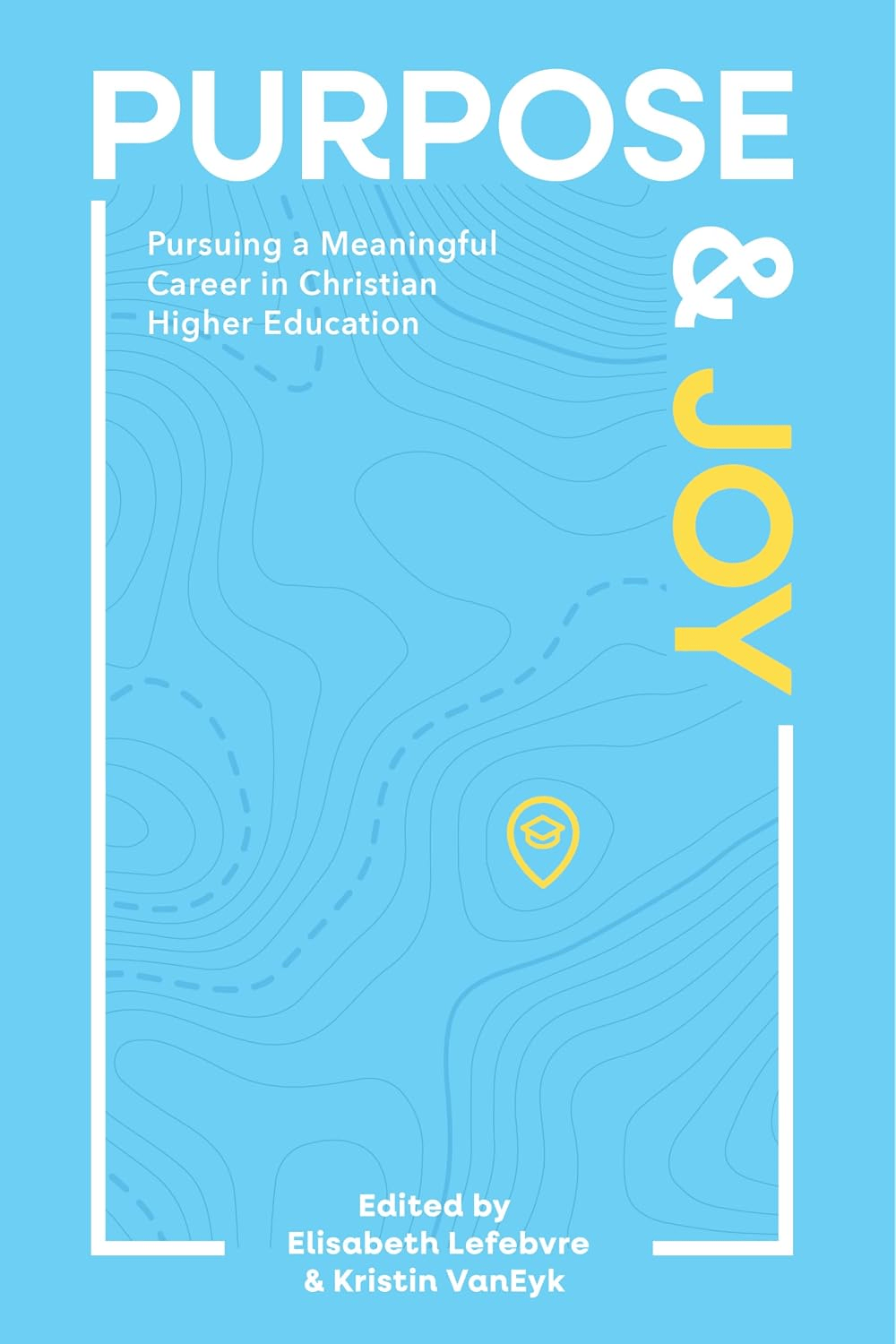
In this post, we encourage faculty members to cultivate a kind of scholarly resilience that doesn’t expect you to do more with the same number of resources; instead, we should build resilience by generating “wealth in people” that we gain through belonging to a community, as Christine Jeske describes in her essay in the volume we edited, Purpose and Joy: Pursuing a Meaningful Career in Christian Higher Education. Friendship within academic communities can take many forms, but we focus here on generative friendships—what we term “academic partnerships”—that encourage personal and professional growth, and thriving. As Paul Wadell writes, “One of the great unpayable debts of friendship is to realize that our friends helped us become better than we ever could be by ourselves.”
In our own experience, we’ve found it helpful to pursue a few specific kinds of academic partnerships.
First, you need friends who are at roughly the same place in their academic careers as you are. Perhaps you meet someone during new faculty orientation, or you get to know a faculty member just a year or two ahead of you. Kristin started her work at Hope College a semester after a colleague in her department, and during her first few months, they regularly checked in with each other to be sure they accurately understood college expectations and departmental culture. These peer relationships are important because they provide you with both camaraderie and feedback. When you must create (several) new courses from scratch during your first semester, they can relate (and commiserate). When you finish teaching a class and need to plop down in a chair and process, they are the people whom you can rely on. These peer relationships also become part of a growing network of faculty members your institution whose career trajectories will likely follow your own.

Second, you need friends who are ahead or behind you. More experienced faculty members can provide essential support to new colleagues because they know their institutions and how to navigate its currents. In difficult moments, these faculty members can also serve as a “voice of reason,” helping colleagues contextualize their experiences. Newer faculty members can provide a different kind of support to more senior colleagues—a sense of innovation, creativity, and anticipation that can be used to catalyze new initiatives and ideas. Both relationships offer important forms of mentorship, demonstrating what might be possible and encouraging us along the way.
Third, you need friends who aren’t at your institution. Each institution has its own culture and its own quirks. It can be healthy and helpful to connect to people outside of it. Maybe you’ve kept in touch with a friend from graduate school, or you’ve had the opportunity to attend a NetVUE conference or some other academic meeting that brings together people from similar kinds of institutions or disciplines. Such connections can often lead to meaningful opportunities and projects: Elisabeth once had the chance to contribute to a UK-based teacher resilience toolkit because of someone she met at a conference. Kristin joined a network through a professional organization and connected her writing course with one in another country, co-teaching with the other instructor. Inter-institutional friendships provide a fresh perspective and unique opportunities that you might not otherwise encounter within your own context.
How do you make these friends? How do you go from being a fellow committee member or a conference acquaintance to being actual friends? We often overlook the six-year-old way to make new friends: you can just ask! Memorably, we became friends over a coffee urn at a Lilly Network Exchange program in exactly this way. But if asking this question so directly seems too risky, start with a lower-stakes one, perhaps about their research or about how they’ve navigated a similar experience. If the conversation is interesting, you can follow up over email and build from there. The point is to connect about something that you share.

Once you have a new friend, what do you do next? Ask them for a favor. As we noted in our last post, it can be exceptionally hard to acknowledge our limitations, but researchers have found that asking people for favors actually makes them like you more. Moreover, people often feel like they can’t ask a favor of someone whom they’ve never asked before (creating a chicken and egg problem). So, be the person to go first. Ask someone to edit a grant application that you can’t stand reading again or ask someone else to join you in leading a faculty book club. It’s possible that initial connection might lead to a longer collaboration; it’s likely they’ll ask you for a favor in return. The point is that people often need not just an initial connection, but also an ongoing reason to work together.
Finally, be generous with your connections and opportunities. While in graduate school, Elisabeth learned a valuable lesson from a friend and colleague with whom she would go on to collaborate quite extensively. When he knew two people who shared a common interest, he would send an email connecting them: he’d include a brief and complimentary bio of them both, explain why he thought they’d make a good connection, and then leave things in their hands. Sometimes these kinds connections result in a cup of coffee and nothing more, but some connections also grow into important networks and additional opportunities. As we’ve noted previously in this series, good work creates additional opportunities for more good work, so there is no need to hoard resources, even when they seem scarce. The next time you are asked to contribute to a project and don’t have the bandwidth for it, suggest someone you know who might be a good fit.
We can’t promise that every time you pursue an academic partnership it will work out. Every effective academic collaboration requires thoughtful negotiation, and we can all think of group projects that turned into nightmares. At the same time, as we look back on our careers, we have to agree with Jeske, who writes, “My own sustainability and joy did not come merely from protecting myself … much of my journey depended on other people’s influence—countless colleagues within my institution and beyond, including those who know me personally and those who set up systems where workers thrive.” We are each where we are because we have friends and colleagues who have made our trajectories possible.
“My own sustainability and joy did not come merely from protecting myself … much of my journey depended on other people’s influence—countless colleagues within my institution and beyond, including those who know me personally and those who set up systems where workers thrive.”
Christine Jeske
Ultimately, vocational thriving requires community, and community requires intentional effort. Some of our most interesting work has happened because we made a connection to someone somewhere and it grew into something more. As LuElla D’Amico notes, our “deepest gladness and the world’s deepest hunger are rarely met by ourselves alone. Instead, they are fulfilled in the company of colleagues who remind us of our callings when we grow weary, who laugh with us when the work becomes too heavy, and who co-create alongside and with us when the Spirit stirs new possibilities.”
Elisabeth Lefebvre is an associate professor of education and president of the faculty governance assembly at Bethel University in Arden Hills, Minnesota. Elisabeth’s research focuses on the mutually constitutive relationships among schooling, history, and culture. Along with Kristin VanEyk, she is the co-editor of Purpose and Joy: Pursuing a Meaningful Career in Christian Higher Education. Her research has also been published in Comparative Education Review, Journal of Education Policy, Teachers College Press, the International Journal of Educational Development, and elsewhere. She also writes about education, justice, and community for Christianity Today, Mockingbird, and Reformed Journal.
Kristin VanEyk is an assistant professor of English education at Hope College in Holland, Michigan, where she teaches writing and education courses. Along with Elisabeth Lefebvre, she is the co-editor of Purpose and Joy: Pursuing a Meaningful Career in Christian Higher Education. Her scholarship about teaching, education, and language studies has also appeared in Daedalus, Pedagogy, Christianity Today, and elsewhere.
For more posts in this series and others by Elisabeth and Kristin, please visit their author pages on this blog.