
A series on the impact of intentional living communities on young adults as they explore and discern their vocations.
Gina Ciliberto lives in Yonkers, just blocks from the New York City borough she loves: the Bronx. In 2012, Gina graduated from Fordham University. During her sophomore and junior years, she lived at the Anne Devenney House, a university-sponsored, off-campus community that bridged the gap between students and their neighbors in the Bronx. Asked how the community impacted her, Gina simply said, “It changed my life.”

The Anne Devenney House began as a project of Fordham’s campus ministry. Although it didn’t require religious affiliation, all seven residents in the first year of this intentional community identified as Roman Catholic. Living together in a standalone house a few blocks from campus in a predominantly Latinx neighborhood, they committed to the three areas of the program: community service, campus outreach, and intentional community within the house. There were mandatory dinners together once a week, but they often shared meals informally.
Gina had a tough first year at Fordham. She’d attended a diverse public high school, which was a stark contrast to Fordham—a private, predominantly white university. It felt insulated from the rest of the Bronx, and Gina felt out of place. She didn’t connect with many classmates and considered transferring.
But the Anne Devenney House changed everything. When she moved into the community, Gina made friends with students from other years. They prayed together and discussed philosophy and faith. Through those relationships, they found space to talk about values and purpose. Gina’s community-mates are still her closest friends from Fordham. “I felt like the coolest people from campus were cherry-picked to live with me,” she said.
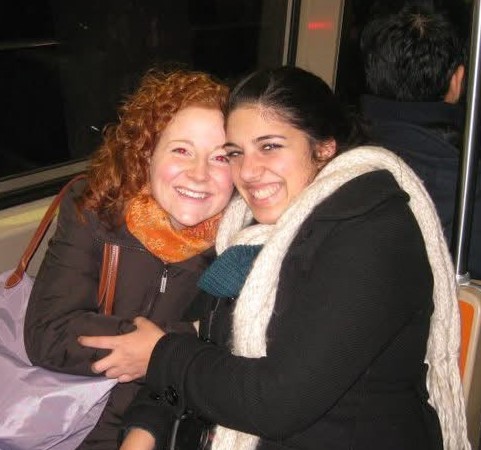
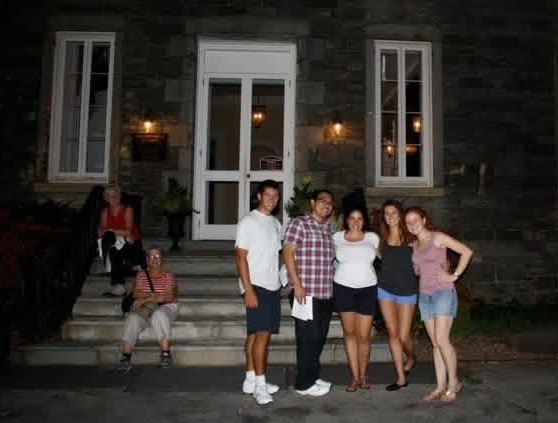
The Anne Devenney House community extended beyond its residents to neighbors in the Bronx. Through the residents’ community service projects, they met people who became part of their lives, and these relationships deepened Gina’s sense of purpose and belonging. She volunteered with the music ministry and youth group at a Catholic church. When one teen got pregnant, she organized a baby shower. Another resident volunteered with a youth sports team, and those teens often stopped by the house. Every Sunday the residents held an open house on the porch with conchas and coffee for all. For Halloween, they even transformed their home into a haunted house. The Anne Devenney House connected to the broader Fordham community, too, inviting students, faculty members, and staff to join them for meals.
In a borough split by racial and economic inequality, Gina and her fellow residents understood the political power of relationships. Gentrification was a regular topic around the kitchen table. Reflecting their evolving understanding, they voted to name their house after a local hero: Anne Devenney was a Roman Catholic community organizer and a fierce advocate for her neighborhood. Arson attacks ravaged the Bronx in the 1970s, often sparked by landlords who wanted to collect insurance payouts and displace poorer residents. Anne Devenney drew a line, calling on her neighbors to protect their community and stop the fires.
As Gina contemplated what she would do after graduation, she learned about opportunities through her friends in the community and decided that she would continue to center relationships in whatever she did. An older community-mate applied for the Fulbright program, which Gina hadn’t heard of before. She eventually followed this example, and after graduation, she worked as an English teaching assistant in Malaysia as part of that program. While many of her peers spent their free time traveling around southeast Asia, Gina stayed home to connect with her Malaysian neighbors. By deepening those relationships, Gina was living out the values she’d learned through her previous community engagement.

Since 2014, Gina has worked for the Dominican Sisters of Hope, and it’s easy to see the connection between this work and the intentional community she experienced as an undergraduate student. The Dominican Sisters of Hope are known for their commitment to Catholic social justice, and Gina’s time as a resident of the Anne Devenney House nurtured her calling and introduced her to the issues that she works on today. As a communications professional, Gina covers stories about the sisters’ work for causes like environmentalism and immigrant rights.
Anne Devenney House only existed for two years. When Fordham ended the program, it cited the costs and logistical challenges of housing students in an off-campus community. Gina said that the house’s off-campus location was what made it so “magical and life-changing,” adding that “institutions need to support communities like this. It takes resources to bring people together.”
Fordham is far from the only institution to close this kind of community program for financial reasons. Facing budget cuts, universities argue that programs like these are hard to justify because they only house a small number of students and cost more in staff time and housing resources. To defend a program’s value and impact, staff must often track the number of students who engage with it, even if each interaction is brief or superficial. These are objective metrics, but they are also impersonal and incomplete. Testimonies from students and graduates document a kind of impact that can’t be translated into data points. Both Katerina (featured in the first post in this series) and Gina considered transferring or dropping out before joining their communities, and they largely credit these programs for helping them persist. This reflects the potential for these programs to facilitate belonging and student retention—and perhaps most importantly, vocational reflection. The Anne Devenney House might have only housed eight to ten students at a time, but as Gina said, it changed lives. Staff, faculty members, and administrators who care about vocational exploration and discernment should consider advocating for intentional communities as one powerful way to make space for such reflection.
Gina and her former community-mates still discuss life’s big questions and explore together their evolving vocations. As they build families or change careers, they return to questions of faith and justice, often reflecting on the evolving role of Catholicism in their lives. Over fifteen years later, the Anne Devenney House remains part of who they are and who they are becoming.
Abby Rampone is a writer and ministry professional in Chicago. Her writing about religion and intentional community appears on her Substack, Love in Community. She previously worked as a ministry coordinator at DePaul University and holds degrees from Union Theological Seminary and Williams College. She participated in the 2026 NetVUE Writing Colloquy.