

According to Terese Lund, “mentoring is the relational infrastructure for formation,” a definition she offered on the second day of the NetVUE Regional Gathering at Presbyterian College that took place September 24–26 in Clinton, South Carolina. The assistant vice president of Purposeful Pathways and professor of psychology at Wingate University, Lund drew on her experience as an administrator, faculty member, and mentor as she mapped out a few significant vocational frameworks for participants to consider. She then invited them to reflect on them as they explored the role of mentoring in experiential learning as a key part of vocational exploration and discernment for undergraduate students. As Lund argued, this process is one that students “should not have to do alone.”
The theme of this gathering was Vocational and Experiential Learning: The Call to Mentorship, which focused on this central question: “How does mentorship in experiential learning opportunities foster genuine vocational formation in students?” Over the course of three days, participants examined the role that such opportunities play in student learning, sharing concrete practices that could deepen the mentoring culture on their own campuses—all with an emphasis on this work could shape students’ sense of purpose and calling.
On Thursday evening, Austin Shull, associate professor of biology and the director of Presbyterian College’s Center for Inquiry, Research and Scholarship, convened the gathering. In his opening remarks, he acknowledged that even as educators in higher education do need to focus on career as a part of a student’s calling, an undergraduate degree should prepare students for more than a job or the world of work. “What does this preparation really mean?” he asked. “It should focus on citizenship and contribution.”
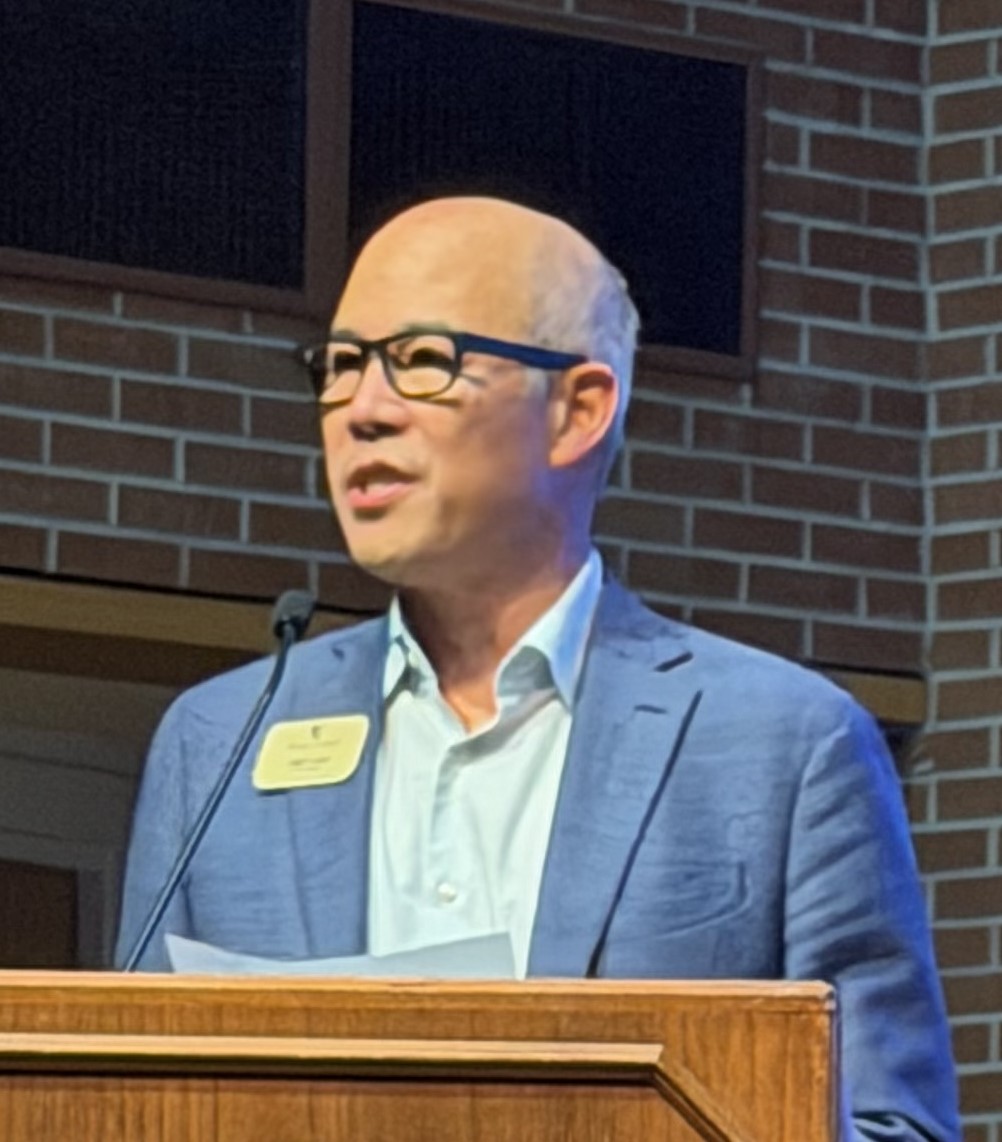
Shull then introduced Andy Chan, vice president for innovation and career development at Wake Forest University, who gave the gathering’s opening keynote address. Well-known for his TEDx Talk, “‘Career Services’ Must Die,” Chan challenged participants to continue to reimagine what it means to prepare students for their futures after graduation, encouraging his listeners to mentor students intentionally and to help them develop vocational clarity, resilience, and a sense of purpose to sustain them over the course of their lives. To the undergraduate students in the audience, he offered this advice to guide them after college: “Stay curious. Stay connected. Keep becoming.”
For Andy, staying curious means being attentive to what life’s next questions might be and exploring answers to them. This requires being vulnerable and embracing the uncertainty of not knowing what the future might hold. Such uncertainty can be unsettling, but Chan reminded participants that “we”—especially students—“don’t have to answer these questions on our own.” By cultivating connections with other people, students can continue to talk to others about their interests, dreams, and evolving sense of calling after graduation. Chan folded both these suggestions into his final piece of advice, encouraging participants to harness their curiosity and their connections to their future growth and evolution. Even though graduation and a first job can (as he acknowledged) seem like a conclusion to years of hard work, they are also the beginning of a much larger process of becoming. With the right mentorship, an undergraduate education serves as training ground for the rest of a student’s life.
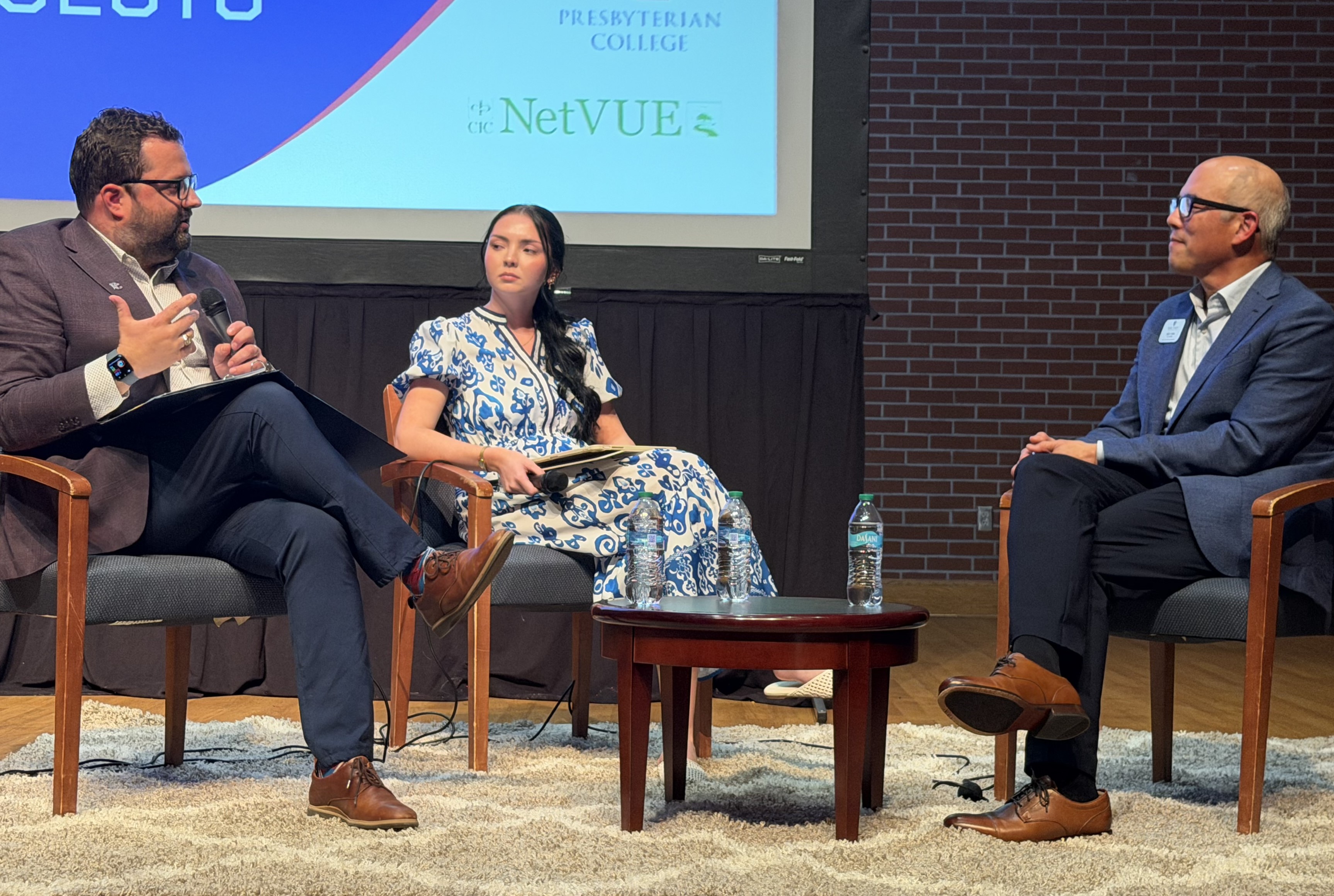
Chan also offered some direct advice to staff and faculty members: Don’t tell students what you think they should do or try to solve their problems. Instead, mentors should help students discover possibilities, so don’t forget, he reminded the audience, the power of a thoughtful question. To serve as good mentors, educators should listen deeply to their students, expand their sense of possibilities, and then identify at least one step they could take to answer their questions. “Stay with the question long enough for the real concern to emerge,” he said. “Give room for uncertainty.” And then ask a mentee, “What could you do next to learn a little bit more?” When students wrestle with these kinds of questions in the presence of a mentor, they can test an interest or reflect on an experience with someone they trust and respect. Ultimately, for Chan, mentoring is a “responsibility and a privilege”—a role in which staff and faculty members can “pay attention and see something others can’t see” and help students “take the next steps” in their journeys.
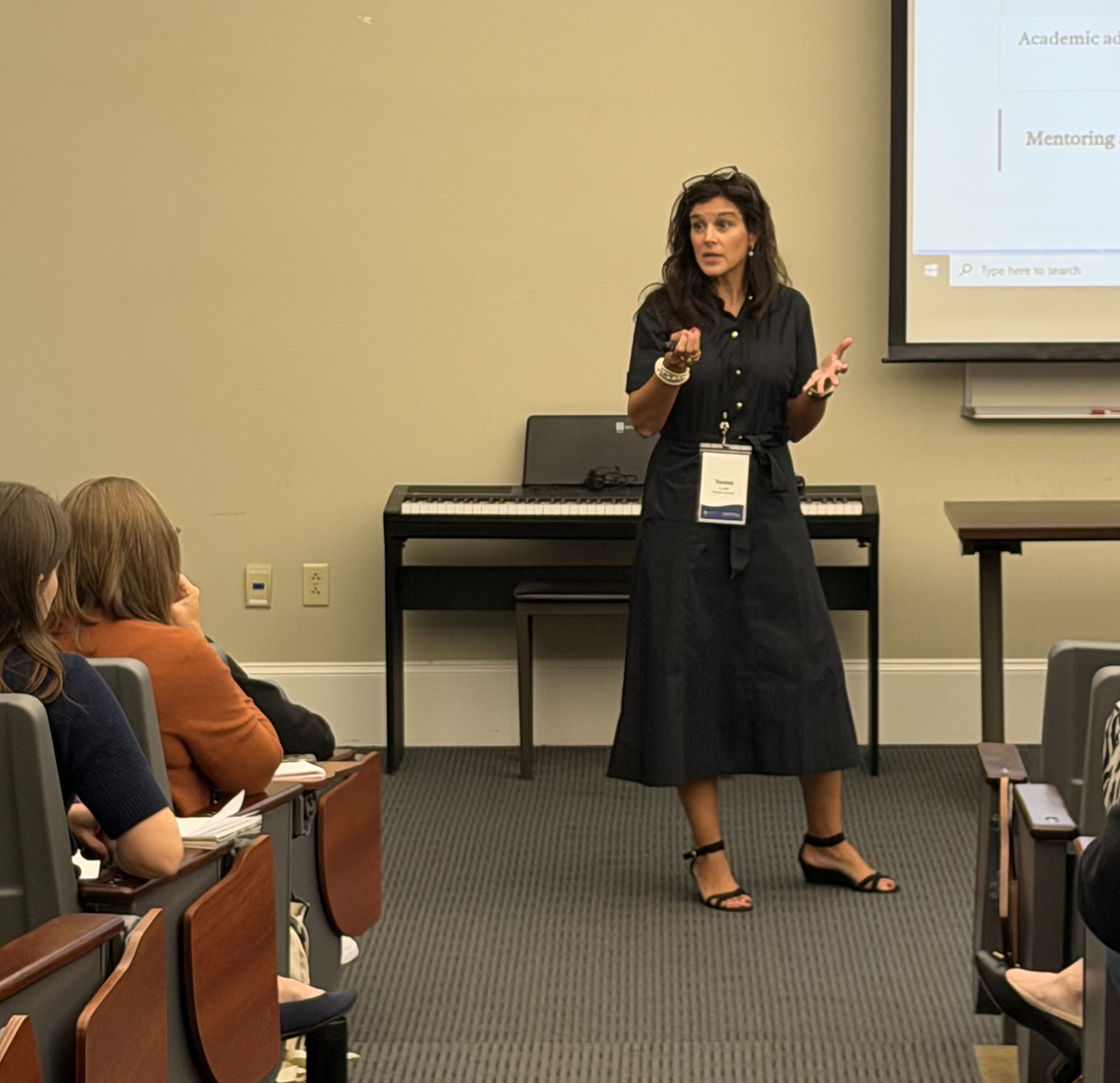
On Friday, Lund returned to these themes in her keynote address—“Creating a Culture of Purpose: Scaling Purpose: Mentoring, Experiential Learning, and Institutional Responsibility.” In it, she explored how participants could create a culture of purpose on their own campuses. For Lund, defining purpose in relationship to vocation means shifting the question from “Who am I?” to “What does the world need?” In her words, purpose is a “personally meaningful, long-term aspiration to contribute to the world.” In this way, purpose is not just self-enhancing but other-oriented.
Citing recent research, Lund noted that 43% of Gen Z adults say that they lack a sense of purpose, even as 79% of them desire purposeful work (and yet only 56% have it). But, as Lund argued, “purpose is not a luxury good,” and it should be available and accessible to all. As much as this data reminds us of the risk that undergraduate students might not develop a sense of purpose, it also represents an opportunity. As students move through their degrees, developing or having a sense of purpose is a developmental asset. According to Lund, students who have a purpose do better academically and persist at higher rates. Purposeful people also do better in their careers. Graduates with a high sense of purpose in their jobs are nearly ten times more likely to have high sense of well-being; graduates who have completed internships also score higher on measurement of well-being.
Even though it is common to talk about finding a sense of purpose, Lund argued that “purpose is formed, not found.” She challenged participants to demystify this process for students and to create experiences anchored in connection that help them discern their purpose. As mentors, educators should acknowledge that they can’t actually answer students’ questions about what their purpose should be, but they can walk alongside and accompany them in this process of formation. As she explained, forging relationships helps to form purpose. Doing so in the context of experiential learning opportunities allows students to test hypotheses about themselves and to reflect on these experiences with others—through which students can gain greater clarity about their emerging sense of vocation.

Lund made a compelling case that experiential learning provides students with a useful structure to explore what they should do in their futures. These activities can take many forms, including academic internships, supervised research, clinical practice, community-based learning, and direct service. All these activities provide students with supervision and parameters that allow for reflection. Echoing Chan’s address from the night before, Lund cautioned participants against giving students a map for their experiences; instead, she argued, students “have to create their own maps. We can’t be prescriptive; we need to walk alongside them and listen.” In this way, Lund reminded everyone that the purpose of college is to guide students from possibility to formation—a process that allows students to engage the questions that animate their lives and ultimately leads them to envision a life and a future worth pushing for. Mentorship is central to this endeavor.
As this regional gathering concluded, Shull and Buz Wilcoxon, the Marianne and E.G. Lassiter Chaplain and dean of spiritual life at Presbyterian College and co-organizer of the gathering, guided participants through a set of questions that allowed them to reflect on the significance of the preceding two days, including a focus on who serves as mentors at their institutions in experiential learning program and defining what they do. This final reflection culminated in this question: What is the vocation of a mentor? What followed was a discussion that reflected the care and expertise that NetVUE members bring to this important issue. Participants explored the sharing of borrowed experience, the gifts that mentors’ vocations can be to their mentees, and the power of being authentically present to each other and modeling happiness, satisfaction, and flourishing for students.
Please visit the Past NetVUE Regional Events website to access more information about this regional gathering. There you will find several resources that might be of use to you and your colleagues at your institution.

Geoffrey W. Bateman is the editor of Vocation Matters and NetVUE’s director of strategic communications. In 2017, he participated in the inaugural NetVUE faculty seminar on Teaching Vocational Exploration, and his essay, “Queer Vocation and the Common Good,” appears in the fourth volume of the NetVUE Scholarly Resources Project, Called Beyond Our Selves: Vocation and the Common Good (Oxford, 2024). He contributed “Queer Callings: LGBTQ Literature and Vocation” to Cultivating Vocation in Literary Studies (Edinburgh, 2022), and is a professor of criminology, sociology and justice studies at Regis University. Visit his author page on this blog for other posts by him.