

The second post in a series on Shakespeare, pedagogy, and the power of literature to help us navigate ambiguity in our callings.

By most estimations, reading Shakespeare carries little value as career preparation. No one—not even English majors—will be asked in a job interview to prove what they know about Shakespeare. But while knowing the content of his plays may not mean much, I’m convinced that the process of reading them may very well shape our vocational trajectories.
It did, at least, for my student MR.
Aspiring to attend law school, MR was gregarious and relational, always willing to engage and converse and dressing with a zany flair. But underneath this whimsy was a penchant for precision. They liked things crystal clear and were uncomfortable when they were in shades of gray, especially when it came to assignments and grades. In their eyes, a black-and-white answer could always be deciphered if we just took enough time to find it. This love for exactitude was both an asset and a liability for an aspiring attorney.
When MR was a junior in my Shakespeare seminar, nothing roused their passion as much as reading The Merchant of Venice. It’s a notoriously troubling play, centered on a bitter feud between the pious Antonio and the Jewish merchant Shylock, a rivalry with racial and ethnic overtones. The way it straddles comedy and tragedy is one reason why critics categorize it as a “problem play.”
All in all, Merchant is frustrating—which is also what makes it an especially vibrant text to teach.

MR was especially drawn to Merchant because it culminates in a courtroom scene that exposes a technically legal but deeply unjust verdict, at least to modern eyes. At the beginning of the play, Antonio asks Shylock for a loan with outrageous terms: If he doesn’t pay it back on time, Shylock can cut a pound of flesh from any part of his body he wants. When Antonio can’t repay the loan, the much-abused Shylock finally has the upper hand, whetting his knife as he stands with assured victory in the courtroom. But suddenly, with the help of a mysterious lawyer, Shylock is outwitted. More than that, he’s left destitute and ostracized, forced to convert to Christianity and required to relinquish his entire estate to the merciless Christians who caused his demise. What makes this conclusion even more bitter is that it reads like a comedy. The play has set audiences up to see it as a happily-ever-after ending.
MR was rightly outraged and thus, based on plenty of textual evidence, named Shakespeare an antisemite who projected his own privileged, white, Christian voice through this play.
But their assessment was more rigid than the play necessarily allows. It also includes moments that seem to point in the opposite direction. In a stunning articulation of shared humanity, Shakespeare assigns to Shylock the most compassion-inducing lines of the play:
Hath not a Jew eyes? Hath not a Jew hands, organs, dimensions, senses, affections, passions—fed with the same food, hurt with the same weapons, subject to the same diseases, healed by the same means, warmed and cooled by the same winter and summer as a Christian is? If you prick us do we not bleed? If you tickle us do we not laugh? If you poison us do we not die, and if you wrong us shall we not revenge?
According to literary critic Stephen Greenblatt, this speech is an example of how Shakespeare attempted to tear down xenophobic walls, even as his work also constructs them. Yes, the characterization of Shylock is freighted with all the brutal stereotypes assigned to Jews, both then and now. But Shylock is also arguably the most complex, multi-faceted figure in the play. His words ring with more vitality and integrity than any other character’s. His soliloquy makes a compelling defense of shared humanity, inviting audiences to look with compassion on all people and communities who have been ostracized, stereotyped, and misunderstood—and especially those who have been rendered so by the religious elite.
“What then are these words doing,” I asked MR, “in a purportedly antisemitic play?” MR held their ground, rightly pointing out passages that supported a more insidious reading. But still, I said, what do we do when the text simultaneously pulls the other direction? How do we make sense of a play —and a playwright—that speaks with contradiction?
Like most of my students (and myself, if I’m honest), MR wanted to resolve the tension and articulate a comprehensive interpretation that would explain the contradiction. But it’s hard to achieve this resolution with Merchant. Over a period of several weeks, we spent more than a few hours in my office shuffling back and forth across the pages as I played devil’s advocate to MR’s categorical statements. Underneath their rigid interpretations was a transparent discomfort toward a text that resisted clarity.
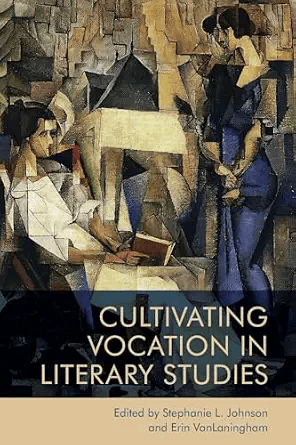
MR returned to Merchant the following year as the focus of their undergraduate thesis. This time around, they navigated the play’s contradictions with deeper nuance, still passionate about the play’s injustice but slower to accuse and quicker to probe and ponder. Their multi-year process of wrestling with a text—and especially a text that wrestles with law and equity—and re-seeing it has made them a successful law student and will make them an even better attorney. In this way, the English classroom shapes students’ vocational paths in many ways and helps them develop skills needed in all sorts of professions. As Stephanie Johnson and Erin VanLaningham observe, “Literary studies cultivates the ability to listen carefully and to negotiate ambiguity … it can provide undergraduates with the skills and focus necessary to examine their own lives with intensity.”
MR’s passion for justice also illustrates the call to the common good explored in Called Beyond Our Selves: Vocation and the Common Good, an essential dynamic within vocational exploration that draws us out of overly individualistic sense of calling. Literature played a part in honing this passion—not by depicting black-and-white examples of justice versus injustice, but by exposing a grayness that invited humility and discernment.
In crafting Shylock’s subversive monologue, Shakespeare may have seen himself as resisting his culture’s dominant narratives about Jews, but he didn’t get it quite right. He couldn’t see his own complicity even as he sensed a glimmer of a more equitable way.
Plenty of lines in the play remind us that we, too, may not see clearly. “Beshrew your eyes,” one character says, reminding us to second-guess our initial assumptions. And again: “All that glisters is not gold.”
Merchant’s fraught example of blindness and tangled contradictions becomes an invitation for students to test their own sight and to turn their curious eyes even toward themselves. For MR, this kind of literary analysis equipped them for a vocational path that will surely necessitate the keen eyes of justice.
Julianne Sandberg is an associate professor of English at Samford University, where she teaches first-year writing courses and British literature. Her teaching and scholarship often explore the intersection between theology and literature, and she is the author of Early Modern Literature and the Bodies of a Reformed Eucharist. A participant in the 2025 NetVUE Writing Colloquy, she writes about life, literature, and faith on her blog, A Companioned Life. For more posts by Julianne, visit her author page on this blog.