

A series drawing on a therapist’s insights into play, wandering, and presence in relation to vocational exploration and discernment.
Humble callings upon an early rise, easy to cast aside.
The glory in a student’s struggle—how to uniquely guide?
A thoughtful intellectual, with time and curiosity to give,
An ideal image that often collides with how most of us actually live.
The simple truth is our lives are full, with care and needs each day.
How easy to critique, dismiss, and belittle the impact of our way.
The calling is not perfection and meeting every need,
The calling is rhythm, reflection, and goodness of the deed.
—Carrie Caudill
Achievement and optimization mindsets have become deeply ingrained in the culture of higher education. My own internal script often demands, “Go, go, go! Grade those papers. Make this class content more interactive. Don’t forget about applying for that grant proposal. Oh, and look on Amazon—your son needs a new lunch box. Don’t forget to respond to the Meal Train request, and the committee meeting is in 15 minutes, so you can do something in the 13 minutes before you log on to Teams. Go!”

Whew! (Make room for box breathing.) As I write these lines, my heart is racing, and my body is tense. In such moments, we often feel time-starved and pressured to accomplish more and to execute it all perfectly. Yet such pressures completely undermine the joy and the “scribbliness” that should be integral as we explore our vocations and pursue purpose and meaning.
Throughout this series, I have reflected on the many being roles we experience in our lives. Yet when this expansive view of calling is married to our life-hacking culture, we can easily feel overwhelmed, and it can cause us to feel unworthy. We end up haggard and frazzled, feeling discouraged by our disheveled home, unread emails, and a child’s overlooked test. While it can seem virtuous to respond to this pressure and live out each being role fully and excellently, doing so ultimately falls short because we face limits, and the process is not linear.
It’s scribbly, did you catch that? Scribbly is the counterweight to optimized—messy, nonlinear, experimental, relational, confounding, and unfinished: the way vocational exploration tends to be. The true path of vocational faithfulness is not optimizing all callings but staying present within their constraints.

What is really happening in our own lived experience is that our values collide with our finite humanity. In Follow Your Bliss and Other Lies about Calling, Bonnie Miller-McLemore wrestles with these conflicted callings. She notes that vocational identities frequently interfere with each other. Do I become a model professor by refining my learning objectives and creating new experiential activities, or do I go spend an evening with my family—sharing a meal, cleaning up, and watching an episode of a favorite show together? Both decisions are good, both require my time and effortful attention, and both compete with the vision of my ideal self who can somehow do both, and do them exceptionally well.
Miller-McLemore also identifies another kind of calling that powerfully intersects with conflicted callings—relinquished callings. To let go of a calling often involves factors that are often outside our control, such as financial upheavals or pandemics, or those that represent an intentional commitment to a path of great care and sacrifice, such as becoming the primary caretaker of an aging family member. But relinquishing one calling—perhaps for a season or even permanently—can also make space for another calling that can be tended today. Can we move onto this vocation with an open, yet hurting heart?
When we acknowledge the grief of losing an identity or a source of meaning in one area of our lives, we can create the necessary space for other callings that matter. Lamenting and holding space for sadness become important emotional processes that allow for this transition to occur. As Deanna Thompson writes, “When our sorrow and anguish are acknowledged and borne with others, we can become unstuck and able to move … toward healing and hope.” In this way, such grieving creates room for the Caller to transform what was into what can be. Limitations of time, money, and location can point toward the next vocational season. Perhaps the problem is not that we have too many callings, but that we expect that we can give all of them our full attention all at once. Not every calling needs to be fully expressed in every season. Seasons have distinct elements that may be dormant but not necessarily dead—like seeds waiting to sprout in spring—in the same way that our “being roles” that receive less attention are not necessarily less meaningful.
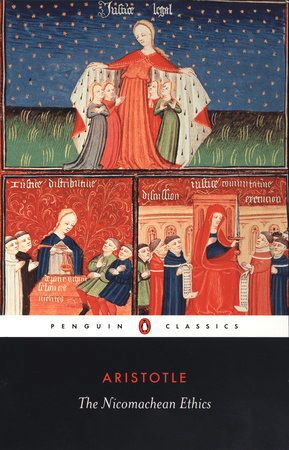
Philosophers have long considered how to live the “good life.” This target often feels elusive yet worthy of pursuit. In his Nicomachean Ethics, Aristotle posits that flourishing, or eudaimonia, requires space for contemplation and then deliberate choice, rather than the maximization of every activity or outcome. He taught that virtue develops from consistent actions, cultivating wisdom and understanding, engaging in social life, and avoiding extremes. In today’s context, I believe that my worthiness is not based on my performance, my appearance, or others’ approval. It is an unshakeable, innate truth that each person is uniquely cared for and called by the Caller. My response should be to listen carefully and slowly to gain an understanding of what is good enough in this season. Embracing the logic of “good enough” invites gratitude, acceptance, and peace—which are true markers of vocational discernment.
In this context of vocational faithfulness, the Ignatian Examen, a Jesuit contemplative practice, offers us a chance to do just that and reflect on the meaningfulness of any given day. In the last 24 hours, I can ask, where was my care directed? How did I experience my calling? What goodness can I recognize? Instead of asking, “How much did I accomplish?” or “How well did I fulfill my goals for today?” good enough faithfulness reflects on, what was mine to tend? Myself, my students, my family, and my health are all worthy of attention, but they cannot receive the same amount of it at the same time. Allowing for the scribbliness and messiness of life, can I also ground myself, notice, and receive? Can I recognize and name the goodness that was present in my day? I exercised my body. I looked a student in the eye. I really listened to my child’s story. I sat quietly and watched the light through the trees.
We don’t need to optimize our lives to fulfill our vocations. We need to inhabit them with scribbles that are just good enough and clear enough to sketch out and discern this season of care.
Carrie Caudill is an associate professor of psychology at Newberry College and a licensed therapist. Her work integrates mindfulness, nature, spirituality, and relational well-being to promote human flourishing across educational, clinical, and community settings. Her scholarship and professional presentations focus on mindfulness, nature-based interventions, spirituality, mental health, relational quality, and their impact on well-being. Her writing has appeared on Psychology Today and the South Carolina Counseling Association’s blog, as well as in the journal, Mental Health, Religion & Culture. She was a participant in the 2026 NetVUE Writing Colloquy. For more posts by Carrie, please visit her author page on this blog.