Seeking the Courage to Know What Matters

A reflective exercise that focuses on three points: 1) One creates meaning by living with courage, 2) Courage comes from within oneself, and 3) Purpose requires an authentic commitment to things that matter.

A reflection exercise based on a series of aphorisms

As we begin a new academic year in which we are connecting with students remotely or meeting some of them on campus, we share an overwhelming sense of unpreparedness, stress, and uncertainty. This unprecedented moment is the perfect opportunity to invite students to reflect on how they can meet the demands of our time and find meaning and purpose through courage. 

There is no better time to encourage students to talk about the challenges they face at home and on campus, in their personal lives, and in their relationships with others. We can support students by reminding them that despite the many challenges and limitations they are facing, courage is the virtue through which they can transcend their fears and doubts in order to reach new possibilities. Courage is what makes us able to make possible the impossible.

Continue reading “Seeking the Courage to Know What Matters”

Theological responses to the pandemic

On June 17, 2020, the Network for Vocation in Undergraduate Education (NetVUE) hosted a webinar on “Theological Responses to the Pandemic.” The goal of this event was to offer a range of theologically-grounded responses to the current public health crisis and to the deep social inequalities that it has laid bare. Four NetVUE scholars took on the task of thinking theologically and responding responsibly to these uncertain and sometimes terrifying times.

Continue reading “Theological responses to the pandemic”

Back to the Future III: Does the Future Belong to Smart Machines?

In this series of posts, I have been exploring how the future figures into vocational discernment. So far, my explorations have been more philosophical in nature as I have pondered the “prolepsis of vocation” and the importance of Aristotle’s notion of “Becoming.” In this post, I briefly consider how technology will increasingly affect such ponderings.

Continue reading “Back to the Future III: Does the Future Belong to Smart Machines?”

Just the facts? Or might honesty matter as well?

20160130_172459We might differ in our views about the sources of our callings, and about the exact nature of a call. But can anyone deny that honesty ought to be an important part of living out one’s vocation?

It seems obvious enough, but someone apparently needs to tell that to the engineers at Volkswagen—especially given the recent “diesel dupe” scandal.

I’m convinced that this controversy has serious implications for vocation. Educators are uniquely poised to either support or subvert honest dealings between the environment, our social systems, and the economy. The recent scandal suggests that we can’t settle for a “just the facts” approach to education. 20160130_172429We need to think more about professional formation with respect to the obligations that we have to one another — not to mention our obligations to the Earth that sustains us.

My interests in this story are both personal and professional. As the proud owner of a 2003 Jetta TDI (built years before the models in question), I have endured great suffering to keep this vehicle on the road. I had been looking forward to upgrading to a newer, shinier, cleaner-burning diesel Jetta, preferably one with working A/C (did I mention I live in Florida?), and one  Continue reading “Just the facts? Or might honesty matter as well?”

Royce, loyalty, and vocation – some initial thoughts

Royce saw the self as essentially social—we come to be a “self” through our embeddedness and participation in human communities.

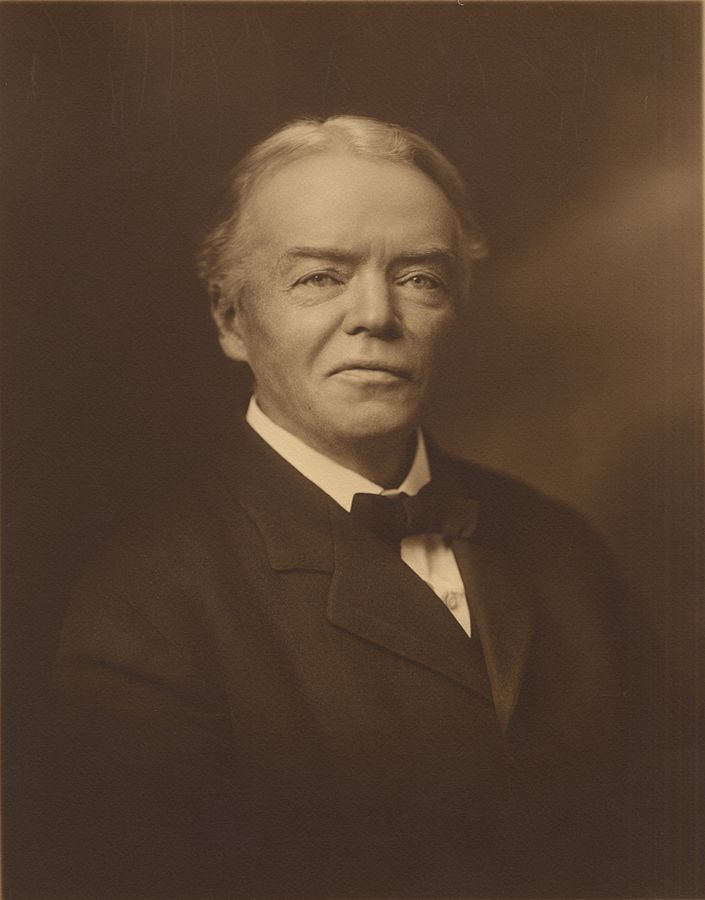
Writing in 1908, in part responding to what he saw as the problematic and radical individualism of American culture, Josiah Royce suggested that the whole moral life can be centered on the singular virtue of loyalty. Loyalty, as Royce defined it, is the “willing and practical and thoroughgoing devotion of a person to a cause”Josiah_Royce [from The Philosophy of Loyalty (Vanderbilt UP, 1995) 9]. In the same work, Royce goes on to spell out how a “cause” can serve as the overarching focus of human lives, connecting them to others through concerted, coordinated action.

My hunch—an idea that I would like to pursue through this project—is that Royce’s work can serve as a resource for vocational discernment because Continue reading “Royce, loyalty, and vocation – some initial thoughts”

Smartphones and vocational reflection

Do smartphones help or hinder reflection upon vocation? It depends. Medieval Christians distinguished between curiositas—a vice—and studiositas—a virtue. Curiositas is inconsistent with vocational reflection; studiositas undergirds real reflection upon calling. Although I enjoy my iPhone, I know it encourages shallow curiosity rather than contemplative wonder.

Smartphones constitute ideal technology for cultivating and satisfying curiositas. These pocket-sized gadgets provide easy access to new knowledge on demand, so that a hunger for novelty finds endless fodder, inadequate though it is for real intellectual sustenance. Smartphones also present Continue reading “Smartphones and vocational reflection”