(Re)-reading Wendell Berry on community and vocation (part 1)

Wendell Berry (Photo by Guy Mendes)

One definition of  “community” that I have become fond of lately comes from a quote by Wendell Berry.  You don’t have to look very hard for a good quote by Wendell Berry about almost anything.  I could get lost on Berry’s BrainyQuote page and never find my way out.  The connection between vocation and community is strong throughout Berry’s work, but David Guthrie’s recent post, which highlights the many shortcomings of our academic communities, has convinced me that  Berry has something important to say about this connection.  My plan is to look at two of Berry’s essays, the first (in this post) published in 1969 and the second (next time) published in 2015, that contain definitions of community and vocation that may very well be… definitive.  Continue reading “(Re)-reading Wendell Berry on community and vocation (part 1)”

Finding your calling — and playing catch

The language of “vocational discernment” is finding a foothold in higher ed these days, but occasionally some critics have asked whether this is just a fancy way of talking about “deciding what to do in life.” playing-catchInstitutions may have adopted new language, but aren’t they simply doing what they’ve always done—namely, helping students to choose a major and to embark on a career?  Or does “vocational reflection and discernment” really point to a genuinely different way of helping students think about their future lives? I believe that it does, and that one way to understand this difference is to think about playing catch.

I don’t usually find myself turning to sports for metaphors, but I think this one works.  For most sports, there are certain things that one can do alone: learning about the game, undergoing physical conditioning, and watching the techniques of the greats.  In some cases, one can even practice a sport alone: go for a run, hit tennis balls against a wall, or throw softballs and baseballs into one of those “pitch-back” nets. But all athletes know that these experiences are not the same as Continue reading “Finding your calling — and playing catch”

It’s Not Just About the Money

By Sgt. William Begley (https://www.dvidshub.net/image/574004) [Public domain], via Wikimedia Commons

As my colleague David Cunningham has already discussed, a comment made at the November 10 Presidential debate brought many things into question: “I don’t know why we have stigmatized vocational education. Welders make more money than philosophers. We need more welders and less philosophers.”

David mention the ongoing conversation about the factually incorrect part of the statement (who makes more money) and the grammatical error (less v. fewer). He also considered how this particular use of the word vocation continues to inform much public discourse:

“The last two decades have seen huge changes in the language of vocation, such that — in the world of higher education, at least — the phrase ‘vocational education’ is no longer so frequently used when referring to trade-school training for work such as welding, cooking, or diesel mechanics.  But as this candidate’s comment suggests, that usage is still very common in the larger political and cultural realm.”

Continue reading “It’s Not Just About the Money”

Royce, loyalty, and vocation – some initial thoughts

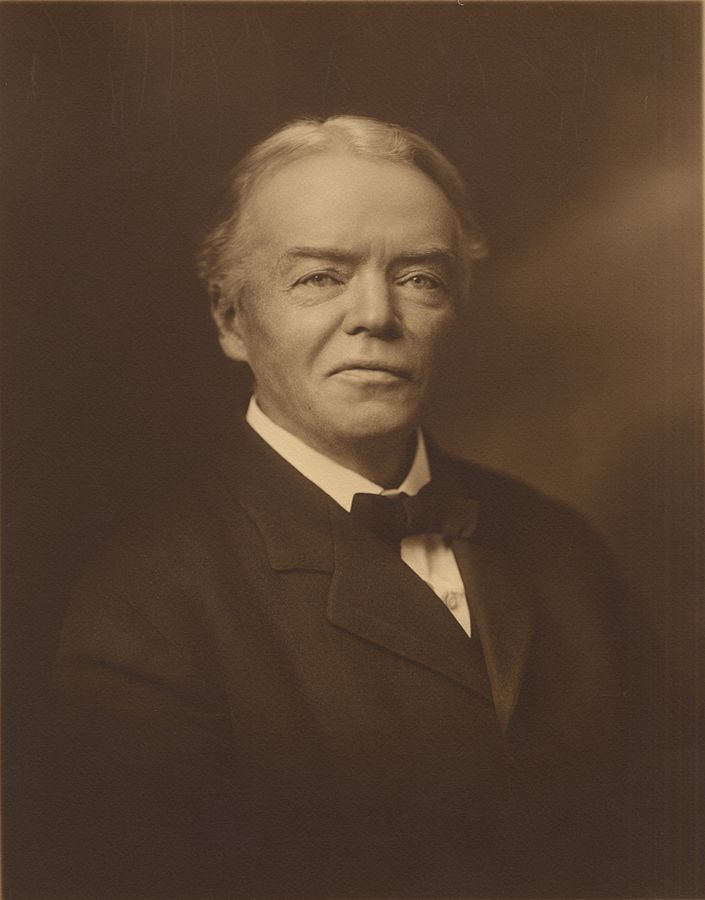
Royce saw the self as essentially social—we come to be a “self” through our embeddedness and participation in human communities.

Writing in 1908, in part responding to what he saw as the problematic and radical individualism of American culture, Josiah Royce suggested that the whole moral life can be centered on the singular virtue of loyalty. Loyalty, as Royce defined it, is the “willing and practical and thoroughgoing devotion of a person to a cause”Josiah_Royce [from The Philosophy of Loyalty (Vanderbilt UP, 1995) 9]. In the same work, Royce goes on to spell out how a “cause” can serve as the overarching focus of human lives, connecting them to others through concerted, coordinated action.

My hunch—an idea that I would like to pursue through this project—is that Royce’s work can serve as a resource for vocational discernment because Continue reading “Royce, loyalty, and vocation – some initial thoughts”