
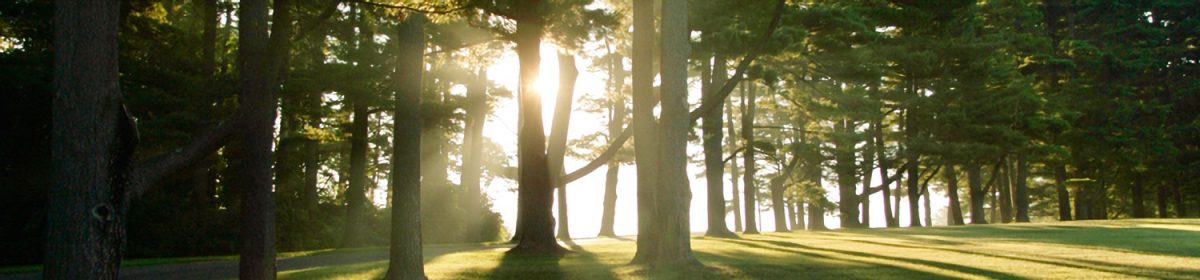
This spring, I took a class on a field trip to the main campus of the Sisters of Charity of Nazareth, a community of Catholic women whose charism includes a call to live sustainably and work for environmental justice. Some of our course texts highlighted the natural world as an emerging source of spirituality among nonreligious young people in the US, and I wanted students to see that many traditional religious communities find God in nature, too. The question was how today’s “nones” might resonate with, well, nuns.

On a beautiful Saturday in April, we walked the immense campus and heard the Sisters’ attention to the land is rooted in their love of God and all that belongs to God. The following Tuesday, I asked the students what they had learned on the trip. My focus on course content had me looking for evidence of learning in conceptual connections, so when students’ initial responses provided such evidence, I thought “great, objective achieved.” But then someone offered a different sort of comment: “What I really liked is that we were outside walking and talking with each other. I feel like I got to know people. Obviously I’ve seen you guys all semester, but I hadn’t really seen you. Just being together like that is what will stick with me. I learned I should do it more.”
Genuine human connection: another objective achieved! Yet it hadn’t been an explicit objective because, to be honest, the weight I give to conceptual learning often relegates connection and friendship to the periphery. When it happens, wonderful, but it’s not really the goal. How might my teaching change if I acknowledged that developing a capacity for friendship is a fundamental component of the overall process of learning?
Continue reading “Educating for Friendship”

