
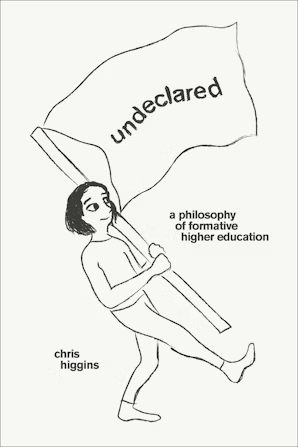
Vocational Formation as Humane Learning: Insights from Chris Higgins’s Undeclared

In his book Undeclared, Chris Higgins criticizes the focus on job preparation in universities and proposes a vocational formation that integrates personal values and ethical understanding into work. This post explores his emphasis on the importance of practical reasoning and ethical considerations in education, and points to ways we might prepare students for a meaningful and ethical life and work.

In his new book Undeclared (available via open access from MIT Press), Chris Higgins  usefully criticizes the “jobbification” of the contemporary university. In its place, he describes an ideal of vocational formation that both inspires and has the potential to guide our actions.  

The final chapter of Undeclared begins with a familiar dilemma. A humanities department is called to justify their budget and faculty lines (if not its very existence). In response, Higgins offers what may seem like a counterintuitive suggestion. Rather than argue for how the humanities prepare students for the job market, or defend the separation of humanistic inquiry from vocational concerns (even though both have the virtue of being true), Higgins suggests that an expansive vision of vocation can reinvigorate humane learning in our time.

Continue reading “Vocational Formation as Humane Learning: Insights from Chris Higgins’s Undeclared”

Called to the Common Good in Teacher Education: Reflections on the 2024 NetVUE Keynote Address

In her keynote address at the 2024 NetVUE Conference, Meghan Sullivan, professor of philosophy at the University of Notre Dame, offered insight into how and why we can and should help our students deeply consider their callings.

In professions known for producing heroes, teaching ranks among the top. As Christine Jeske observes in her chapter in Called Beyond Our Selves: Vocation and the Common Good, teaching is found among the short list of “‘good’ vocations” whose work is assumed by our society to flow out of an abundant generosity. Teachers are famously overworked and underpaid, and as a teacher educator I’m constantly mindful of this backdrop for much of my work, including the facilitation of vocational exploration and discernment among undergraduate students.

Meghan Sullivan

In her keynote address at the 2024 NetVUE Conference, Meghan Sullivan, professor of philosophy at the University of Notre Dame, offered insight into how and why we can and should help our students deeply consider their callings. She reminded us that when students experience a lack of training, a lack of a sense of vocation, and a lack of being formed and habituated in a great community when they’re young, they can more easily come to believe that everything truly is about them. The result of this lack of formation can lead to a pursuit of money and power as if nothing else is worth aiming for in life. Sometimes, these students can eventually acquire enough power to destroy the common good.

Continue reading “Called to the Common Good in Teacher Education: Reflections on the 2024 NetVUE Keynote Address”