

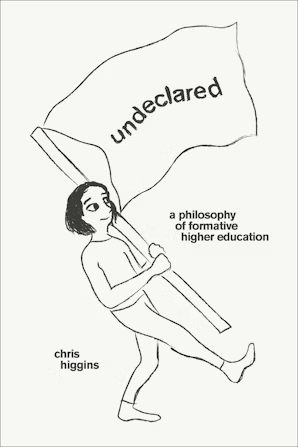
In his new book Undeclared (available via open access from MIT Press), Chris Higgins usefully criticizes the “jobbification” of the contemporary university. In its place, he describes an ideal of vocational formation that both inspires and has the potential to guide our actions.
The final chapter of Undeclared begins with a familiar dilemma. A humanities department is called to justify their budget and faculty lines (if not its very existence). In response, Higgins offers what may seem like a counterintuitive suggestion. Rather than argue for how the humanities prepare students for the job market, or defend the separation of humanistic inquiry from vocational concerns (even though both have the virtue of being true), Higgins suggests that an expansive vision of vocation can reinvigorate humane learning in our time.
Continue reading “Vocational Formation as Humane Learning: Insights from Chris Higgins’s Undeclared”