Vocation and Pedagogy I: Viewing Our Students with Hope

This post initiates a series on the interplay between vocation and pedagogy, highlighting the significance of hope in the classroom. It emphasizes student engagement and the necessity of viewing learners as valuable individuals. By implementing Universal Design for Learning, educators can create inclusive environments that foster vocational conversations and support students’ unique experiences and aspirations.

The first post in a series exploring the connections between vocation and pedagogy.
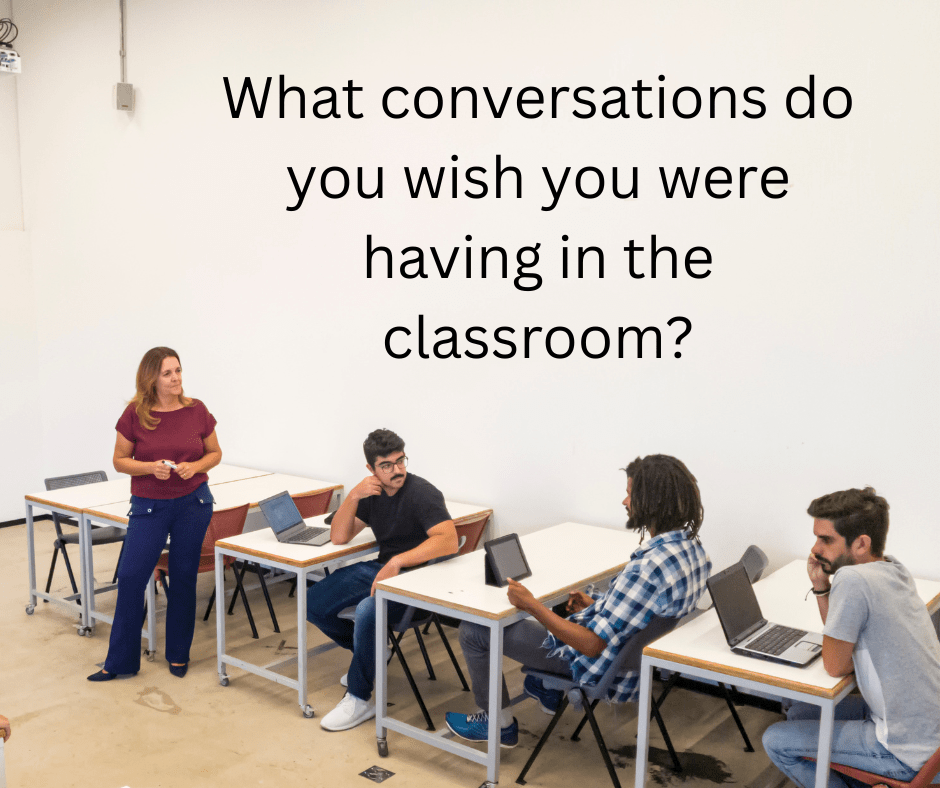
“What conversations about meaning and purpose do you wish we were having in the classroom?” I asked a group of my senior students and then held my breath. When I first began thinking about vocation, I felt overwhelmed by both the possibilities and the challenges of integrating it intentionally into my teaching. To help me do so, I invited my students to help me understand what they needed so that we could imagine what was possible. They were eager to engage, and their ideas jumped quickly among three elements: the content of the conversations, the possible structures for activities, and the culture of the classroom. As my students shared their thoughts, they connected content and pedagogy in ways that encouraged me to think more carefully about designing possible activities to give shape to and reinforce the unfolding conversation. It was the beginning of my learning journey, which has led to many interesting observations of the reciprocal relationship between vocational exploration with students and general pedagogy.

In this first post, I want to consider vocational and pedagogical hope in the classroom. Students are shaped by the hopes we hold for them and the value we see in them. Engaging vocation invites us to see our students not merely as the receivers of learning but as people whose experiences, skills, and passions have value. It challenges us to consider how our interactions contribute to their discernment and flourishing. To view students vocationally is to embody hope for them, as Paul Wadell so aptly describes. We cannot think vocationally without hope, and the learning spaces we create contribute to communicating that hope to our students.

Continue reading “Vocation and Pedagogy I: Viewing Our Students with Hope”

Echoed Vocation IV: A Call to Wisdom

The author reflects on a journey with his autistic children, emphasizing the virtues of wisdom and humility. Despite his initial misguided decisions during a trip to the Carrowkeel Passage Tombs in Ireland, he learns valuable lessons from his children. Their insights illustrate how wisdom is cultivated through shared experiences and the acknowledgment of limits.

A series of posts about virtue, autism, vocation, and the teaching of history.

Teaching courage, my children echo a call to presence; teaching moderation, a call to self-examination; teaching justice, a call to persistent conversation. The call that is echoed to me by my autistic children with regard to wisdom is perhaps the most important of all.

Continue reading “Echoed Vocation IV: A Call to Wisdom”

Echoed Vocation III: A Call to Justice

This series of posts explores the author’s experiences with teaching virtues in connection with his two autistic children. The focus is on the virtue of justice and the challenges of teaching it, as well as the need for understanding different perspectives on justice. The author emphasizes the importance of persistence in nurturing a vision of justice.

A series of posts about virtue, autism, vocation, and the teaching of history.

Martin Dotterweich

In the first two installments of this series, I explored how the virtues I teach are echoed as callings to me through my two autistic children. As I teach courage, they call me to be present with them in their fear. As I teach moderation, they call me to examine myself rather than judge others. The third echo, justice, is the focus of this post.

Continue reading “Echoed Vocation III: A Call to Justice”

Echoed Vocation II: A Call to Moderation

Ultimately, the call of temperance is a call to self-examination, for each of us knows the things that consume us personally. Moderation is best judged from the inside.

A series of posts about virtue, autism, vocation, and the teaching of history.

Martin Dotterweich

My first exploration of the echoing of vocation between my students and my children suggested ways in which the latter demonstrate exceptional courage. For this second exploration, which will consider the call to moderation, their example for me is more problematic—like the virtue itself.

Continue reading “Echoed Vocation II: A Call to Moderation”

Introduction: Teaching Virtue and Vocation in History 

Often I’ve found that I carry aspects of the teacher’s call to my children, and—as I’ll explore in my upcoming series of posts—my parenting informs my pedagogy in return.

A series of posts about virtue, autism, vocation, and the teaching of history.

Martin Dotterweich

Vocations inform each other, and two of mine seem to be in constant dialogue, deep calling to deep: teaching and parenting. Often I’ve found that I carry aspects of the teacher’s call to my children, and—as I’ll explore in my upcoming series of posts—my parenting informs my pedagogy in return. I’m sure this is a common experience, but mine has a twist that keeps surprising me. This is because both of my children have autism.

It has been easy to see the ways that my teaching has affected my parenting, and Kathleen and Peter would probably attest with a roll of the eyes that, yes, Dad drags us to places he likes and talks a lot. There exists a video of me explaining a thatched roof to them in which they wander off while I keep talking. It’s on brand. 

More surprising has been how much my call as a parent has shaped my teaching and how much my children shape me as a person. I realize how much I learn from them. Specifically, they have helped me understand something that I teach in my history courses: the four cardinal virtues. 

Continue reading “Introduction: Teaching Virtue and Vocation in History “