

In leading faculty and staff workshops on vocation at the NetVUE campuses of Illinois College and Carthage College, I have used this short video to spark conversation. Although the video definitely broadens the scope of vocation beyond specifically theological callings, it does make explicit references to God and to Jesus (it was produced by the Fund for Theological Education). This is always a delicate balance. Continue reading “Vocation 101 video resource”
Category: Uncategorized
Welcome to the NetVUE Scholarly Resources Blog
Over the next several years, a group of about forty academic leaders will be involved in a series of projects designed to create new scholarly resources on vocation and vocational exploration. This project is sponsored by NetVUE, which is administered by the Council of Independent Colleges. Our work is made possible by a generous grant from the Lilly Endowment, Inc.
While we are also publishing journal articles and several books, we are aware that this project is part of an ongoing conversation about vocation as an important dynamic in undergraduate education. We want to support and nurture that conversation by Continue reading “Welcome to the NetVUE Scholarly Resources Blog”
Royce, loyalty, and vocation – some initial thoughts
Royce saw the self as essentially social—we come to be a “self” through our embeddedness and participation in human communities.
Writing in 1908, in part responding to what he saw as the problematic and radical individualism of American culture, Josiah Royce suggested that the whole moral life can be centered on the singular virtue of loyalty. Loyalty, as Royce defined it, is the “willing and practical and thoroughgoing devotion of a person to a cause”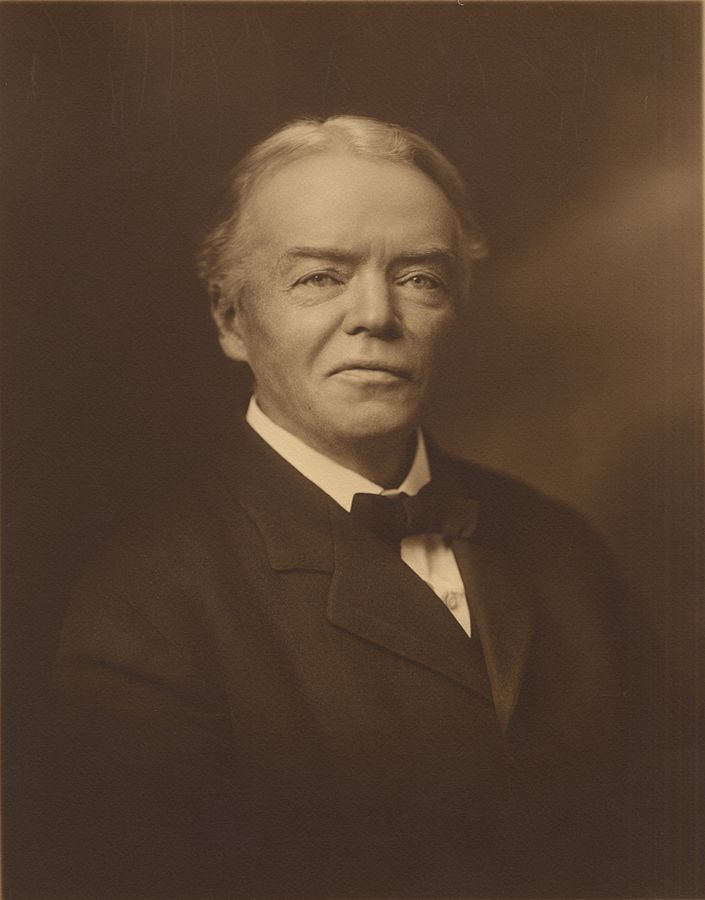 [from The Philosophy of Loyalty (Vanderbilt UP, 1995) 9]. In the same work, Royce goes on to spell out how a “cause” can serve as the overarching focus of human lives, connecting them to others through concerted, coordinated action.
My hunch—an idea that I would like to pursue through this project—is that Royce’s work can serve as a resource for vocational discernment because Continue reading “Royce, loyalty, and vocation – some initial thoughts”
Vocation and freedom in a “free market” economy
Certain presuppositions seem to be embedded in our culture’s general approach to vocation. It is generally assumed that the goal of making vocational decisions is doing what one wants to do. This need not be understood in a crass and shallow way; “what one wants” could be, for example, serving the downtrodden. Nevertheless, discerning what one wants to do is generally understood as the first step in vocational decision.
The second step is assessing what one is able to do; not everyone who wants to make a living as an NFL quarterback or a novelist is able to do so, for a variety of reasons. It is generally understood, however, that having more choices is better than having fewer choices. The ideal is to be able to say to someone “You can do anything you want.” The telos or goal of vocational decision is thereby seen as being “chosen,” rather than given from outside the person.
These presuppositions need questioning, first of all with respect to their origins. We need to look at Continue reading “Vocation and freedom in a “free market” economy”
Ritual, contest, image
Since the inception of higher education, American colleges and universities have always claimed to be focused on the development of the whole student. The contribution by Quincy Brown in collection At This Time and In This Place: Vocation and Higher Education focuses on student activity outside the classroom—particularly advising, athletics, residential life, Greek life, and campus ministry—as places where vocational discernment should and does occur. The nature and quality of these encounters are shaped by such diverse themes such as ritual (including rituals that are not specifically ecclesial), contest (athletic, artistic, or academic), and image (the outward signs of membership in a particular campus community or culture). These themes that are not always addressed and “unpacked” in a classroom setting. He also draws on John Wesley’s conversion (and the Wesleyan understanding of transforming the world through a disciplined life) as a source for understanding the importance of co-curricular experiences for shaping our students’ vocational discernment experiences. Other sources for reflection on this theme include James Fowler, Sharon Parks, Victor Turner, Kathleen Manning, and Larry Braskamp.
Suffering and vocation: a matter of perspective

John Neafsey explores the relationship between suffering and vocation in A Sacred Voice is Calling: Personal Vocation and Social Conscience. He speaks to the notion of “redemptive suffering,” meaning that painful life experiences have the potential to make us wiser and more mature. What turns this possibility into promise depends on our attitude toward suffering.
I can attest to the reality of redemptive suffering based on my own life experience. Personal losses have served as powerful avenues of growth and maturity. Experiencing a significant cancer diagnosis at the age of 22, my eyes were opened Continue reading “Suffering and vocation: a matter of perspective”
Smartphones and vocational reflection
Do smartphones help or hinder reflection upon vocation? It depends. Medieval Christians distinguished between curiositas—a vice—and studiositas—a virtue. Curiositas is inconsistent with vocational reflection; studiositas undergirds real reflection upon calling. Although I enjoy my iPhone, I know it encourages shallow curiosity rather than contemplative wonder.
Smartphones constitute ideal technology for cultivating and satisfying curiositas. These pocket-sized gadgets provide easy access to new knowledge on demand, so that a hunger for novelty finds endless fodder, inadequate though it is for real intellectual sustenance. Smartphones also present Continue reading “Smartphones and vocational reflection”