
The Vocational Power of Appreciation

Parker Palmer emphasizes that educators embody their teachings through appreciation. Jeff Frank discusses how fostering appreciation enhances connections with students, encouraging them to embrace their interests. He argues that this approach can bridge divides, promoting ethical understanding and enabling educators to create a supportive environment for all students, regardless of their backgrounds.

Jeff Frank

Parker Palmer is well-known and respected for his insight that “we teach who we are.” One of the most important dispositions we can cultivate as educators is a stance of appreciation. Teachers who appreciate their students become dependable, showing through their very presence that they want their students to do well. When I enter a classroom and teach who I am, my students experience being in the presence of someone who enjoys expanding the limits of his appreciation. They see me as someone who appreciates being held accountable and actively risks not knowing in the hopes of forging connections to new ideas, new people, and new values. In all these ways, appreciation has become central to how I see my vocation as an educator. 

Continue reading “The Vocational Power of Appreciation”
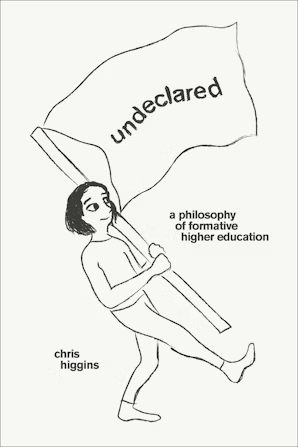
Vocational Formation as Humane Learning: Insights from Chris Higgins’s Undeclared

In his book Undeclared, Chris Higgins criticizes the focus on job preparation in universities and proposes a vocational formation that integrates personal values and ethical understanding into work. This post explores his emphasis on the importance of practical reasoning and ethical considerations in education, and points to ways we might prepare students for a meaningful and ethical life and work.

In his new book Undeclared (available via open access from MIT Press), Chris Higgins  usefully criticizes the “jobbification” of the contemporary university. In its place, he describes an ideal of vocational formation that both inspires and has the potential to guide our actions.  

The final chapter of Undeclared begins with a familiar dilemma. A humanities department is called to justify their budget and faculty lines (if not its very existence). In response, Higgins offers what may seem like a counterintuitive suggestion. Rather than argue for how the humanities prepare students for the job market, or defend the separation of humanistic inquiry from vocational concerns (even though both have the virtue of being true), Higgins suggests that an expansive vision of vocation can reinvigorate humane learning in our time.

Continue reading “Vocational Formation as Humane Learning: Insights from Chris Higgins’s Undeclared”

Dependability as Calling: Facilitating Freedom in Our Polarized Age

This post explores the challenge of supporting students with diverse callings, especially when we might differ and disagree with them. Educators are urged to foster dependable environments to facilitate students’ freedom , even amidst political and ideological differences. The story of Joseph serves as a powerful example of supporting others’ callings through dependability.

blurred motion of woman against overcast
Photo by Kseniya Kopna on Pexels.com

This past spring, I taught a new course titled “Your Life’s Calling.” One of its main goals was to help students discern what it would mean to feel called in a world that often feels noisy, angry, confusing, and devoid of reasons for hope. As we moved through the course, students—especially those who knew they wanted to become classroom teachers—wondered how an educator could support every student’s calling, especially those callings that might challenge or directly conflict with the teacher’s most firmly held beliefs.

Continue reading “Dependability as Calling: Facilitating Freedom in Our Polarized Age”

Responding to AI with a Resonant Education

From the first day of class this fall, we must show students that they are entering a space of possibility—a space where not knowing and the beautiful risk of engagement can lead to purpose, meaning, and resonance.

When I became the inaugural director of St. Lawrence University’s Center for Innovation in Teaching and Assessment in the fall of 2022, I was worried about student engagement and mental health coming out of the Covid pandemic. As that academic year ended, however, I was also alarmed at the ways increasing social media usage coupled with widespread use of artificial intelligence (AI) tools like ChatGPT present us with existential challenges that feel insurmountable.

I am not alone. The Surgeon General released a report noting the ways social media use can “pose a risk of harm to the mental health and well-being of children and adolescents.” And you cannot do any type of faculty development in 2023 without someone raising the question of AI and the future of teaching and learning.

As we approach the fall semester, I offer the concept of resonancedrawn from the work of sociologist Harmut Rosa—to think about how to address what I see as the interconnected dilemmas of the ongoing student mental health crisis and the rise of AI, especially ChatGPT.

Continue reading “Responding to AI with a Resonant Education”