
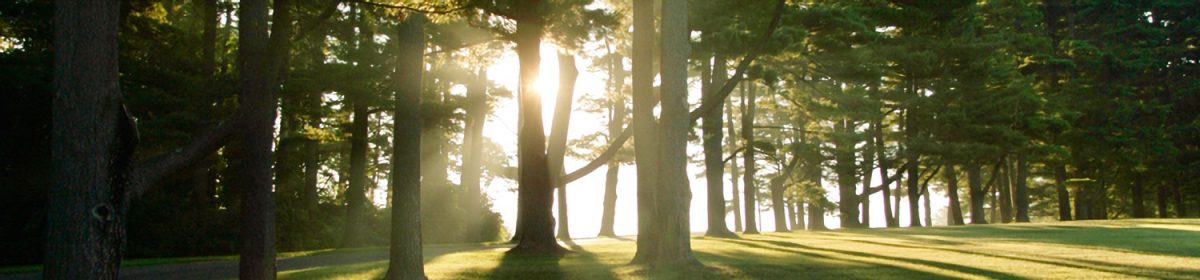
As the new year begins, many of us re-evaluate habits and set new goals. Amidst the barrage of “New Year, New You” messages, I’d like to counter with a simpler alternative: “Same Me, More Vitamin D.” Consider spending more time just being outdoors. Immersing yourself in nature can provide clarity, inspire creativity, and align your work with your values, fostering a deeper sense of purpose and sustainability in both your career and personal life.

The return is tenfold: in addition to gaining deeper insight into our callings, being in nature connects with and impacts our happiness, stress level, and even pro-environmental attitudes and behaviors. To be candid, I hope it’s the latter that sprouts as a byproduct for you and even inspires your vocational calling. As Kathleen Shea writes in “Professing Vocation by Caring for the Land,” “Environmental stewardship should be part of everyone’s vocation. The protection of nature is a universal value.”
In my experience, one key factor that distinguishes proactive environmental advocates from casual bystanders is the amount of time they spend outdoors. Building habits like reducing consumption or improving energy efficiency begins with something even more foundational: appreciating the environment, because out of respect grows vocational responsibility, to echo Margaret Mohrmann’s wise insights.
Living in Chicago’s southwest suburbs in January, even I find connecting with nature easier said than done. Yet even on the coldest days, I find small ways to remind myself of nature’s presence. Sitting in our front room with sunlight streaming through open sheer curtains, I pause to feel the warmth of the sun’s rays—to open nature’s mail, as Jacqueline Bussie puts it—even through the winter chill. Doing so, I am reminded of God’s caring touch, a spiritual anchor that deepens my sense of environmental stewardship. For others who may experience less harsh winters, wandering outside between classes or opting to eat outside for lunch helps break up the day while breathing in fresh air.
For me, this sustainable vocational journey is deeply personal. As Kathleen Shea explains further, “Part of adopting environmental stewardship as vocation is to share the natural world with our descendants, helping them to develop their own environmental values.” As a mother of three young children, I schedule how everyone spends their time—between playdates, extracurriculars, and family vacations. Will my children’s summers be spent outside, or will the heat become too intense? How and where should I build their core memories of childhood and family? Like so many parents, I feel responsible for the world they are inheriting. As a Midwesterner, I felt these concerns acutely in June 2023, when we were encouraged to stay inside at the peak of summer due to poor air quality from the Canadian fires. My oldest had just finished first grade. After years of saying “no” during COVID, it was hard to revisit and confront that helplessness again, especially in the face of such innocence.

Or perhaps it’s my experience teaching Laudato Si’, Pope Francis’s encyclical on caring for our common home, whose message is both simple and profound. “Nature is a magnificent book,” he writes, “in which God speaks to us and grants us a glimpse of his infinite beauty and goodness. Rather than a problem to be solved, the world is a joyful mystery to be contemplated with gladness and praise.” Amid our swirling daily responsibilities, how refreshing it is to hear Pope Francis remind us to simply pause, admire, and stand in awe of God’s art. Whatever the reasons, I find myself at the threshold of a new phase of vocational growth and self-discovery as I channel all my parental eco-anxiety into hopeful action. And I’m not alone; I’m building a community.
At Dominican University, in addition to teaching, I serve as the volunteer chair of our university’s sustainability committee and am designing a sustainability studies interdisciplinary minor. In all these roles, I work to inspire students’ vocational calling, especially regarding environmental protection and preservation. How will they live out Dominican’s mission of creating a more just and humane world, now and after graduation?
For those who already spend a healthy amount of time outdoors and feel a sense of respect for the natural world, I pose a related question to you, just as I do to my second-year students: Nature certainly serves you. How are you called to serve nature? From our cuddly, furry family members, to our satisfying lunchtime apple, to our most treasured vistas, God’s natural gifts are endless. So then, what is our gift in return? While one can never be a purist in this work, we can all certainly do more. As God ultimately call us not only to serve, but to “replenish the earth” (Genesis 1:28).

Consider starting with small changes in your household habits. I recommend Eduardo Garcia’s Things You Can Do, illustrated by Sara Boccaccini Meadows. This beautiful book calls for a re-evaluation of American lifestyles and emphasizes the fact that households are responsible for two-thirds of greenhouse gas emissions. This statistic underscores the tangible impact of individual choices, such as installing a Nest thermostat, switching to LED bulbs, or reducing waste.
To start, it helps to pick a room. Personally, I begin with the closet. As a parent, I am keenly aware of the constant influx of “stuff” required to meet the evolving needs of my three growing children. First and foremost, I try to buy less, and buy better. At the same time, I attempt not to buy everything all at once; at our school, parents organize a biannual uniform exchange, fostering both sustainability and community. We are fortunate to have generous neighbors who share hand-me-downs, and I make it a priority to pay this generosity forward. As my children outgrow their clothing, I prepare bags for friends and contribute to our local Children’s Community Closet, ensuring these items continue to meaningfully serve others.

From these small actions, momentum begins to build—a quiet but powerful force that drives deeper engagement within my own vocational exploration and discernment. What begins as a simple task—like cleaning closets—fosters both personal transformation and outward, physical change. This dynamic interplay aligns daily choices with purpose, cultivating clarity, courage, and a commitment to meaningful action for what James J. Farrell characterizes as the greater “commons good.” Now at the start of this new year, I’m ready for more. Are you?
Maybe after the closet, move to the kitchen. You might try meatless Mondays or reconsider your soda habits, learning in the process how companies like Pepsi, Coca-Cola, Unilever, and Nestle significantly contribute to plastic pollution. Or perhaps you’ll swap out the “order ahead at Starbucks” habit in order to use your own reusable alternatives. All to say, each effort counts; and while perfection is unattainable, progress is not.
Ultimately, change begins with us. We must put our faith into action. Before we can inspire and empower our students to embrace sustainability, we must first strive to embody these values ourselves. This new year offers an opportunity to deepen our vocational commitment to environmental stewardship, while fostering a renewed connection with the world around us. Let us lead by example, one step in the sunshine at a time.
Christine Wilson is currently a visiting instructor at Dominican University in River Forest, IL, where she teaches in the core curriculum and the English department. Her classroom work was recently published in Dynamic Activities for First-Year Composition (NCTE, 2023). In addition to her teaching roles, she also serves as the transitions faculty co-director and volunteers as chair of the sustainability committee. In this capacity, she spearheaded the university’s partnership with the Chicago Transit Authority, expanding access to affordable public transportation for hundreds of students. Her many vocations include parenting three young children and serving as a school volunteer and sustainability advocate.