
A series of posts on integrating vocation into a gateway course for the major, featuring conversations between a professor and her student.
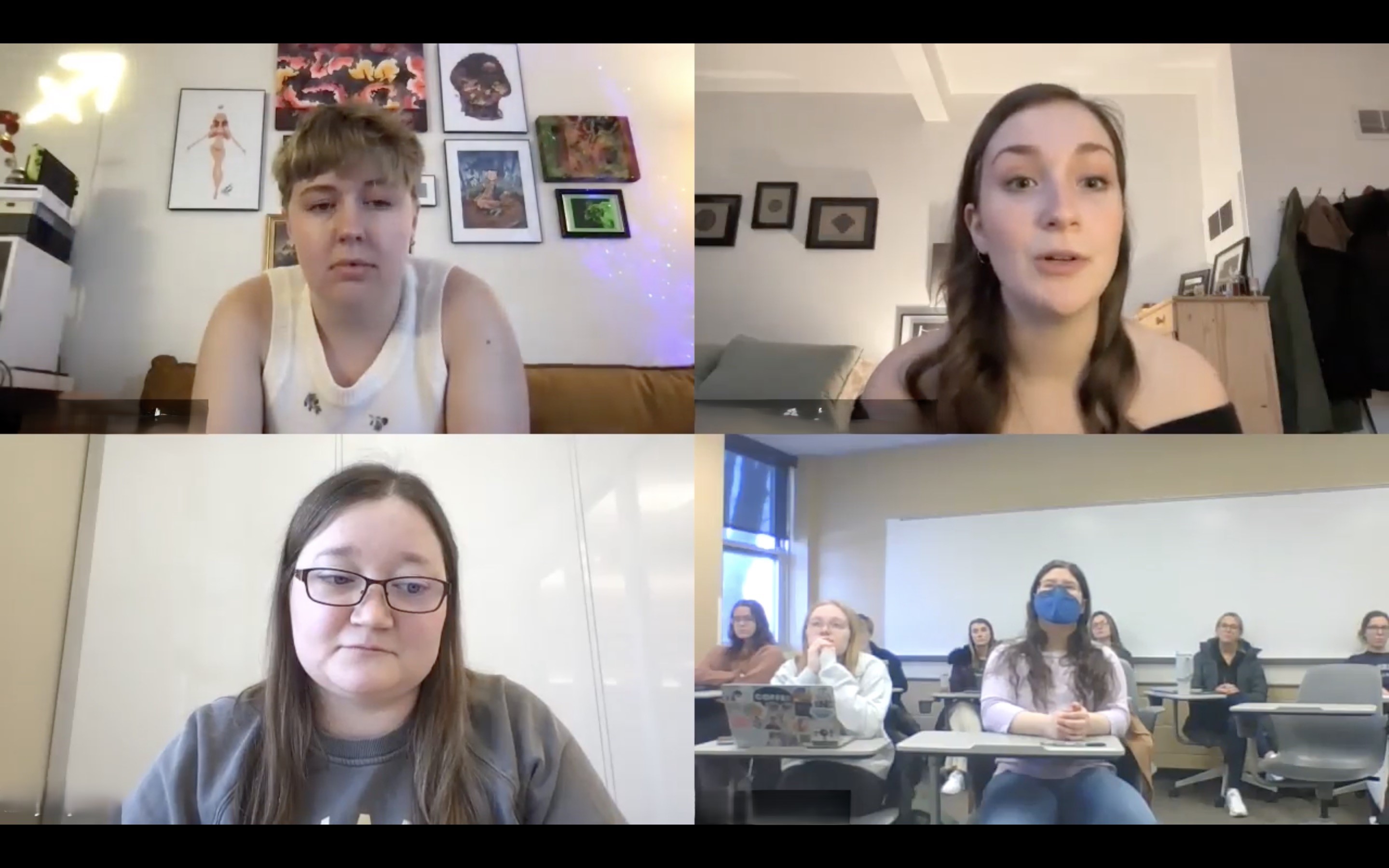
I had invited a panel of three former English majors to attend my Introduction to Literary Studies course via Zoom. They spoke of their job searches and careers, working as paralegals and screenwriters and in other positions at nonprofits, investment banks, and educational software companies.
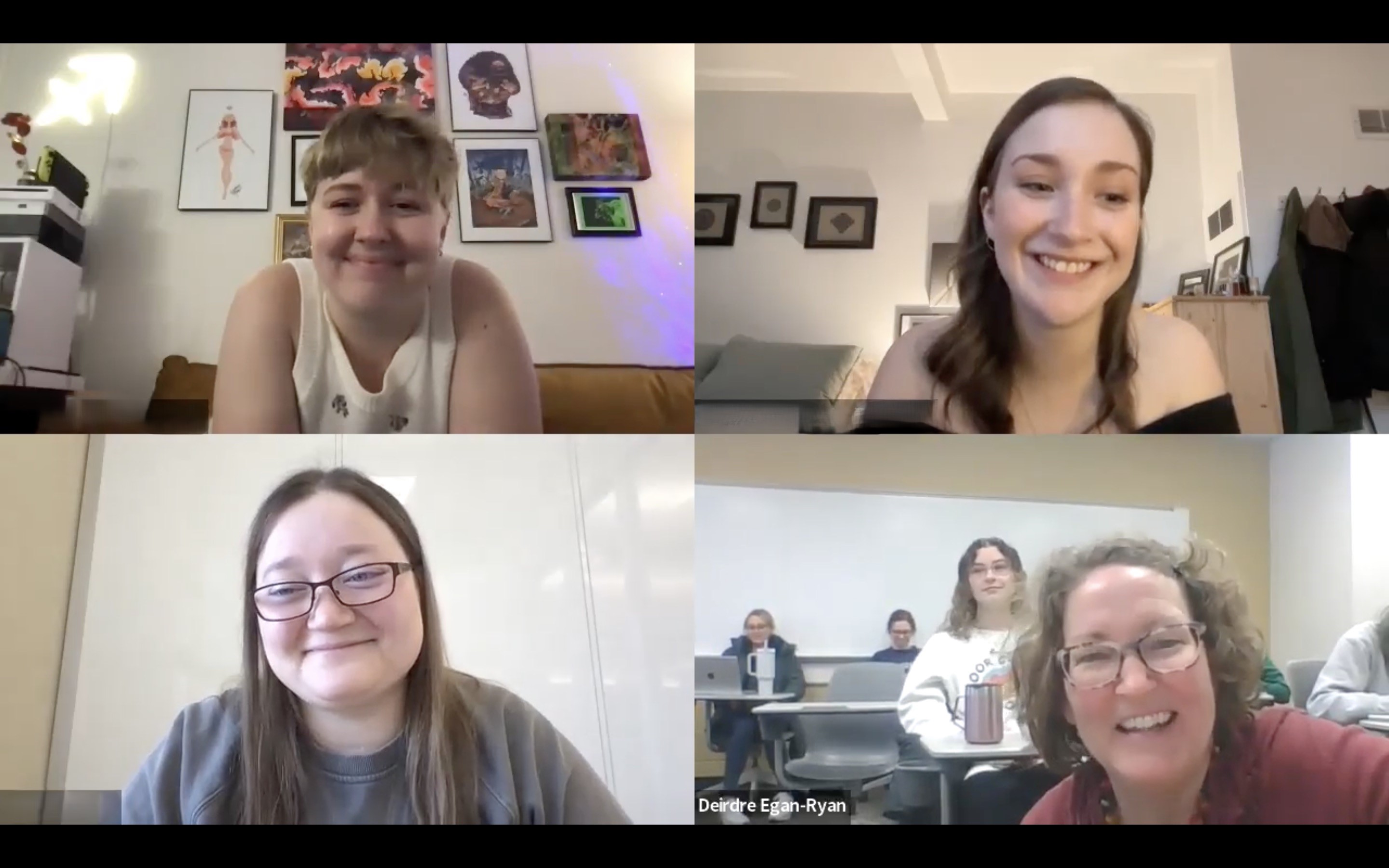
But then the conversation shifted into a more authentic register. One panelist leaned toward the camera. The former student admitted that she had always wanted to spend a year volunteering for a service program after completing her degrees, but she couldn’t afford to do so after spending time and money on graduate school. Even so, she said, her work allowed her to live the life to which she felt called.
My students were transfixed.
She described how she and her husband chose to live in an interracial neighborhood with a strong sense of community. Their home is close to a Catholic elementary school that is committed to social justice based on Catholic social teaching. They valued this multi-racial community and the reality that their white son would be in the minority at this school. She talked about the interplay between her paid work and her multiple vocations—paralegal, mother, community-member, PTA board member—all of which she’s integrated into her sense of meaningful work in the world.
During what might have been a relatively ordinary class session on careers, the perspective of vocation helped create extraordinary connections.

Caroline: This former student’s story about her winding career path and intentional choices as a mother and community member gave me something unexpected: hope. I had absorbed the pressure to pick a job and stick with it, whether it sparked passion or not. Changing careers had seemed like a failure and something to avoid. Her journey flipped that narrative. I began to see a career as a journey shaped by calling and flexibility, not fear of making the wrong choice.
What resonated most was her focus on the meaningfulness of her roles. She spoke without regret about career shifts, viewing them as stepping stones to something more fulfilling. Her story gave me permission to explore multiple vocations and reminded me that a job doesn’t have to define me or be my sole source of purpose.
Her decision to live in an interracial neighborhood committed to social justice resonated deeply. In my Minneapolis high school, 82% of my peers were students of color, and 75% of them were economically disadvantaged. Growing up in this context taught me the value of empathy—of listening to stories unlike my own—and of the importance of acting on those values. This former student made major life decisions not for convenience or status, but for the kind of community she valued. Her actions reminded me that the choices we make—big and small—shape our vocations: where we live, whose voices we amplify, and which stories we bring to light.
In that moment, I realized that the life I want isn’t about sticking to a narrow path or finding the “perfect” job. It’s about weaving together career, community, family, and values into something whole. And that, more than anything, gives me hope for the future.
Deirdre: To create this kind of moment of hope and connection, we pose questions to the panelists in advance that are intentionally vocational. We ask them career-oriented questions such as:
- What parts of your training as an English major have you found useful in obtaining jobs or in your day-to-day work?
- Beyond courses, what other activities did you participate that have influenced or impacted your work experience?
But we also delve into their vocations as whole people and ask:
- What are your community commitments through and beyond work and family?
- How did your time at our college help you think about the potential impact of your many vocations?
Because the panelists were all former students with whom I have longtime connections, I could ask about their sense of purpose and elicit honest and authentic responses. When they described their experiences in terms of vocation, rather than simply as paid work, the impact on my current students was clearly evident. Many of them expressed Caroline’s sense of possibility and were energized by stories that aligned with their developing values. While many of the panelists held jobs that we might not associate with a calling, their flourishing as full people and their complex vocational journeys impressed my current students. These qualities are what made the experience so inspiring.

In addition to attending this career and vocation panel, students were asked to conduct an interview with a former English major and complete a multi-part reflective writing assignment. In it, students initiate the connection with an interviewee, rather than having me organize the interview. I scaffold the assignment in increasing order of development and sophistication: 1) a written summary of the interview; 2) an oral presentation of their takeaways; and 3) a written reflection of these vocational elements across the course.
For the presentation, I ask students to respond to these questions:
- What did this conversation teach you about how people can use skills and habits from an English major or minor in interesting ways?
- What did it suggest to you about how careers change and develop over time?
- What did it teach you about yourself and your developing sense of your career and vocation?
Caroline: I interviewed an English professor at our college. Our conversation offered more than career advice; it reaffirmed my commitment to pursuing what I love rather than fixating on where my degree might lead.
As I mentioned in our first blog post, while I loved English, I felt pressure to pair it with a more “practical” major like business. Hearing my interviewee’s story about how her English degree shaped her career and personal life shifted my perspective. She described how her years of travel and working in bookstores and theater companies revealed the broader skills she had gained. These skills were not tied to a strict career path but invaluable to her journey. Her words gave me permission to explore my interests more fully, free from the fear of not having a mapped-out career path.
This conversation helped me decide to drop my second major in business. Instead, I discovered a new passion for sociology, exploring it for the pure love of learning and its focus on the underlying dynamics that shape our world. The idea of vocation shifted my thinking from a career-first mindset to one where following my passions opens doors to diverse opportunities.

Deirdre: This assignment helps cultivate the oft-overlooked skill of initiating and sustaining conversation. Such conversation is where revelatory storytelling can happen, allowing students a deeper level of vocational exploration. They note that people experience many callings at once and recognize that one’s callings can shift from place to place and sometimes be indeterminate, while understanding that re-tooling and re-orientating are a fruitful part of our ongoing vocational journeys. This process also reveals that callings extend beyond one’s skills or individual pursuits to include passions, challenges, gladness, and sadness. And each of these experiences help us discern purpose. Students see that callings are answered within—and shaped by—our communities. Ultimately, through this process, vocation becomes a hopeful perspective that considers everyone’s mutual flourishing.
Deirdre Egan-Ryan is the director of faculty development at St. Norbert College outside of Green Bay, WI, where she is also professor of English. She is a NetVUE Faculty Fellow and was part of the inaugural cohort of NetVUE’s Teaching Vocational Exploration Seminar. Her essay, “Community-Based Pedagogy, Literary Studies and Vocation,” appears in Cultivating Vocation in Literary Studies; it grew out of her years directing the program in academic service-learning and community engagement at St. Norbert. Her many vocations include rescuing overlooked big dogs and laughing with her teenage sons.
Caroline Van Sistine is a junior at St. Norbert College. A double major in English and sociology, she is interested in gender, race, intersectionality, and vocation in modern literature. She works as a consultant in the St. Norbert Writing Center and also interns at The Green Bay Press Times. This past summer, she was awarded a Summer Undergraduate Research Fellowship and worked with Deirdre Egan-Ryan on researching narratives of vocational flourishing in modern Black literature. A former gymnast, Caroline discovered one of her vocational passions for reading novels as she rehabilitated from an ankle injury.
To read the others posts in this series by Deirdre and Caroline, click here.