
Hope through Connection V: Becoming Ourselves in Community

In a gateway course at St. Norbert College, community-building enhances students’ vocational exploration. Through personal conferences, peer mentorship, and intentional interactions, this gateway course fosters trust and support. This class helps students discover their voices and lays a foundation for meaningful relationships and learning, emphasizing that vocation flourishes within community contexts.

Imagine starting your semester by asking your students, “Who inspired you as a child or teen? What lessons did they offer?” Or ending the course with this question: “What kind of world would you like to leave behind for future generations? How can you start to shape that world now?” Drawn from NetVUE’s Conversation Cards, these questions have set the stage for community-building in our gateway course for the English major at St. Nobert College. It may feel like such conversations are off topic, even a tangent. But we—Deirdre, the course’s professor, and Caroline, her student—give you permission to do this. We assure you that it will pay off.

Continue reading “Hope through Connection V: Becoming Ourselves in Community”
Hope Through Connection IV: Scholarly Conversation and the Real Work of Building a Meaningful Life

At St. Norbert College, an English gateway course integrates literary scholarship with vocational reflection. Professor Deirdre Egan-Ryan and her student Caroline Van Sistine discuss how this approach reshaped students’ understanding of literature and their personal callings. Reading texts on vocation led to deeper academic engagement, community building, and a redefined sense of purpose within their studies.

A series of posts on integrating vocation into a gateway course for the major, featuring conversations between a professor and her student.

Deirdre and Caroline

One of the biggest challenges we faced at St. Norbert College when we redesigned our gateway course for English majors was deciding how much scholarship from the field to include. Our answer? We scaffold engagement with research by asking students to integrate literary criticism selectively into a short research paper, saving more comprehensive methodological investigations for later courses. We also introduce the scholarship of vocation into our discussions about calling and literary studies. Creating this vocational context has helped our students cultivate deeper meaning within the major and set them on journeys of increasing purpose, embedded in community.

Continue reading “Hope Through Connection IV: Scholarly Conversation and the Real Work of Building a Meaningful Life”

Hope through Connection III: Cultivating Skills as Vocational Discernment

This series of posts explores integrating vocation into gateway courses, highlighting discussions between professor Deirdre Egan-Ryan and her student Caroline Van Sistine. Focusing on vocational discernment within English enhances students’ understanding as members of a guild, equipping them with critical skills like effective communication and problem-solving, which prepare them well for the workforce. As they cultivate these skill and apply them in real-world setting, they also clarify their future aspirations.

A series of posts on integrating vocation into a gateway course for the major, featuring conversations between a professor and her student.

Deirdre and Caroline

Gateway courses typically focus on discipline-specific training, assignments, and formation. When we emphasize these foundational habits in the context of vocational discernment, our students begin to recognize that they are members of a guild, with its craft and notions of purposeful living made more apparent. As they enter this community, students become more able to apply their disciplinary knowledge in contexts that help them name and own those skills in ways that resonate with their emerging sense of vocation.

Continue reading “Hope through Connection III: Cultivating Skills as Vocational Discernment”

Hope through Connection II: Called beyond Career

In this post, an English professor and her student reflect on a course in which the professor invited former students to share their vocational journeys, emphasizing the integration of paid work and personal values. Their stories inspired current students to view careers as fluid and shaped by calling, fostering hope and encouraging exploration beyond traditional paths.

A series of posts on integrating vocation into a gateway course for the major, featuring conversations between a professor and her student.

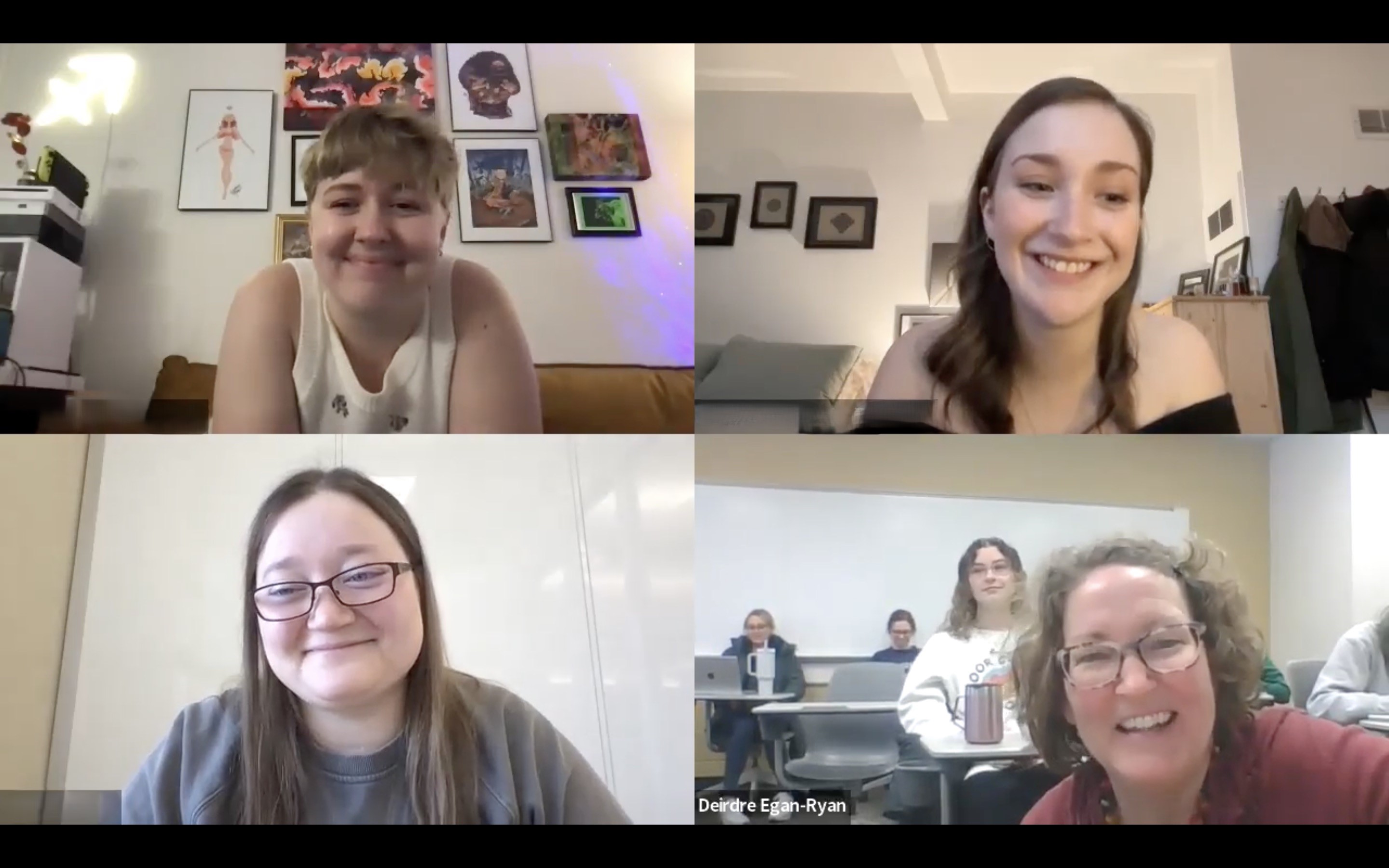
I had invited a panel of three former English majors to attend my Introduction to Literary Studies course via Zoom. They spoke of their job searches and careers, working as paralegals and screenwriters and in other positions at nonprofits, investment banks, and educational software companies.

Deirdre (bottom right) and the panel of former students on Zoom.

But then the conversation shifted into a more authentic register. One panelist leaned toward the camera. The former student admitted that she had always wanted to spend a year volunteering for a service program after completing her degrees, but she couldn’t afford to do so after spending time and money on graduate school. Even so, she said, her work allowed her to live the life to which she felt called.

My students were transfixed.

Continue reading “Hope through Connection II: Called beyond Career”

Hope through Connection I: Integrating Vocation into Introductory Courses

The series explores integrating vocation into a gateway course for English majors. By emphasizing purpose and community, the course helps students articulate their skills while fostering hope, connection, and sense of professional direction. It features a conversation between the course’s professor and one of its students as they discuss the course’s positive impact on vocational discernment.

A series of posts on integrating vocation into a gateway course for the major, featuring conversations between a professor and her student.

In conversations with some friends in higher education these days, there’s a moment where we make eye contact, and—in some form or another—admit this isn’t quite what we signed up for. We see our students’ isolation and mental health crises, fostered by an over-reliance on technology and the aftereffects of the COVID pandemic. We live in a divisive political climate that undermines our deepest shared commitments to civil and informed conversation. We face grave challenges such as slimming—or disappearing—budgets, diminishing numbers of college-bound students, and a perceived lack of confidence in the liberal arts. Let’s face it, the burnout many of us feel is real.

It’s easy to lose hope. But as Paul Wadell reminds us, a vocational perspective embodies hope.

person hand reaching body of water
Photo by Lukas on Pexels.com

At my small liberal arts college, our intentional focus on vocation through our English curriculum has given us and our students a sense of purpose and hope.

Continue reading “Hope through Connection I: Integrating Vocation into Introductory Courses”